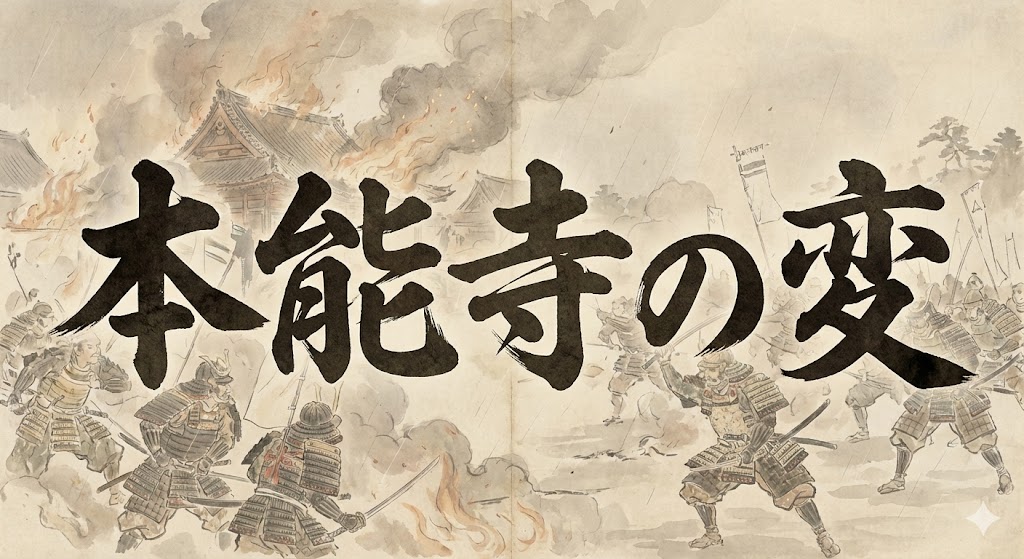
Oda Nobunaga fortified his military through meticulous administrative reforms. Consequently, he successfully installed Ashikaga Yoshiaki as Shogun, but his strict refusal to submit to traditional authority quickly sparked a bitter conflict. Facing a massive encirclement, Nobunaga ruthlessly annihilated opposing warlords and religious institutions alike. Ultimately, a shocking betrayal ended his life at Honnoji, leaving behind a complex legacy of ruthless conquest and profound cultural appreciation.
Nobunaga’s strength stemmed from more than just firearms. He dedicated six years to meticulous Kenchi and administrative reforms in Mino. Therefore, this robust financial engine easily sustained highly expensive mercenary forces. This overwhelming military might allowed him to successfully escort Ashikaga Yoshiaki (The ambitious exile) to Kyoto, positioning himself for national supremacy.
However, this political honeymoon fractured rapidly. Yoshiaki offered Nobunaga the prestigious Kanrei position, but Nobunaga outright rejected it. His absolute disdain for existing authorities severely clashed with Yoshiaki’s desperate desire to restore the traditional Shogunate. Consequently, this ideological divide prompted Yoshiaki to secretly organize a massive coalition to eliminate Nobunaga.
🟢 Key Takeaways 🟢
Solid economic foundations strictly sustain overwhelming military power. Nobunaga’s deliberate rejection of traditional hierarchies inevitably alienated the very Shogun he installed, revealing his true ambition to forge an entirely new political order.

Yoshiaki successfully orchestrated the massive Nobunaga-Hoi-mo. Notably, Asai Nagamasa (The conflicted brother-in-law) betrayed Nobunaga to support the rival Asakura clan. In response, Nobunaga mercilessly eradicated both clans. He completely ignored his sister’s pleas and publicly executed his own nephews to project absolute, undeniable terror across the realm.
Furthermore, religious institutions faced equally brutal suppression. The infamous Hieizan Yakiuchi completely incinerated the centuries-old Enryakuji temple complex. Similarly, Nobunaga ordered the systematic, geographic extermination of the Ikko-ikki strongholds. Ultimately, this sheer brutality, combined with the sudden deaths of powerful rivals like Takeda Shingen, successfully shattered the encirclement and solidified his terrifying dominance.
🟢 Key Takeaways 🟢
Unprecedented threats often provoke merciless responses. Nobunaga strategically weaponized terror, eradicating both familial ties and sacred religious authorities to decisively crush the formidable alliance arrayed against him.

In 1582, Akechi Mitsuhide (The brilliant betrayer) launched a sudden, fatal rebellion. During the chaotic Honnoji-no-Hen, Nobunaga set fire to the Kyoto temple and committed suicide. Thus, an unexpected internal betrayal abruptly terminated his imminent unification of Japan, ending his life at the absolute height of his power.
Surprisingly, this feared “Demon King” harbored deep cultural passions. He obsessively collected rare Chanoyu utensils, utilizing them as supreme political rewards for loyal generals. Moreover, his intense enthusiasm for Sumo wrestling led him to personally sponsor grand tournaments. Therefore, a profound appreciation for arts and sports complexly balanced his ruthless military persona.
🟢 Key Takeaways 🟢
Absolute power remains intensely vulnerable to internal betrayal. Despite his terrifying reputation, Nobunaga’s passionate patronage of tea and Sumo reveals a highly multifaceted leader who actively embraced emerging cultural trends.
── Finally, let's recap with the summary and FAQ of this article.
Oda Nobunaga dismantled archaic authorities to violently forge a new, rationalized society. By analyzing his brutal reign, we observe the terrifying efficiency of prioritizing absolute results over tradition. The main points of this article are:
‣ Breaking massive encirclements through absolute suppression.
‣ A shocking betrayal ending a complex, cultured autocracy.
We hope exploring this controversial autocrat provides valuable perspectives on the extreme costs and mechanics of systemic revolution.
Q1. Why did Nobunaga reject the Shogun’s offer to become Kanrei?
He thoroughly despised traditional frameworks. Accepting the role meant becoming a subordinate within the old system, whereas Nobunaga fully intended to establish his own supreme, independent political order.
Q2. Why did he burn down the sacred Mount Hiei?
The monks actively supported and sheltered his military enemies. Nobunaga ruthlessly prioritized strategic security over historical or religious sanctity, demonstrating that no authority was immune to his wrath.
Q3. Did the “Demon King” possess any human qualities?
Yes. He was a passionate cultural patron who deeply loved collecting valuable tea utensils and eagerly sponsored professional Sumo tournaments, displaying a vibrant and profoundly human appreciation for arts and entertainment.
コメント欄