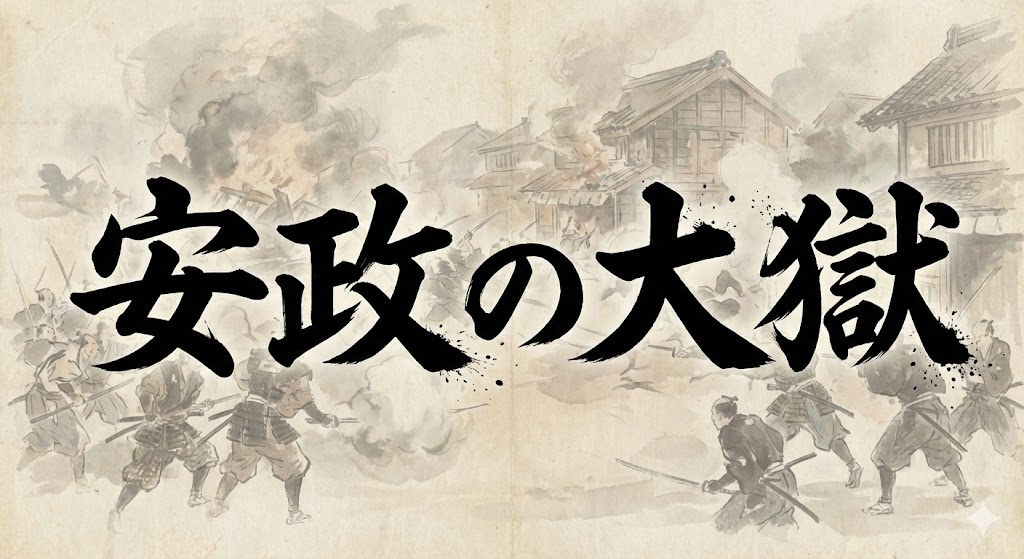
During the late Edo period, Kokugaku scholars fundamentally redefined Japanese identity by elevating the Emperor as the ultimate source of national legitimacy. Consequently, when Councilor Hotta Masayoshi desperately sought imperial consent for the Harris Treaty, Emperor Komei’s shocking rejection permanently shattered the Shogunate’s absolute authority. To restore control, Tairo Ii Naosuke ruthlessly executed the Ansei Purge, violently forcing the treaty and executing political rivals. However, this reign of terror ironically transformed his victims into martyrs, irreversibly radicalizing imperial loyalists and accelerating the Tokugawa regime’s violent collapse.
Prolonged peace prompted profound questions about fundamental Japanese identity. Rejecting heavy Chinese philosophical influence, Kokugaku scholars deeply analyzed ancient texts like the Kojiki. Consequently, pioneering intellectuals concluded that the divine Emperor, rather than the Shogun, represented the absolute core of Japanese culture and identity. This academic pursuit rapidly transformed into a highly potent political ideology.
Furthermore, Mitogaku aggressively weaponized this concept, establishing absolute loyalty to the Emperor as the ultimate moral virtue while fiercely condemning foreign influence. Therefore, a highly dangerous ideological shift occurred. Even while the Shogunate practically managed foreign diplomacy, a growing consensus quietly but decisively permeated the samurai class: true spiritual and political legitimacy belonged solely to the Kyoto court.
🟢 Key Takeaways 🟢
Peacetime academic advancements sparked a massive reevaluation of the Emperor’s historical significance. This intellectual movement forged a powerful political ideology demanding national unity under the Emperor, creating a highly volatile foundation that would eventually collide head-on with the Shogunate’s pragmatic diplomatic policies.
Facing massive public backlash over the Harris Treaty negotiations, Councilor Hotta Masayoshi attempted a highly dangerous Political Miscalculation. He sought unprecedented imperial approval to silence domestic critics, assuming the court would simply rubber-stamp the decision. However, this disastrous maneuver accidentally resurrected the Imperial Court—politically dormant for centuries—as an active, supreme governing authority.
Surprisingly, the fiercely xenophobic Komei Tenno outright rejected the treaty, expressing absolute fury over the proposed opening of Hyogo port. Consequently, the Shogunate suffered a humiliating, unprecedented public rebuke from the sovereign they supposedly protected. Hotta resigned in disgrace, leaving the government trapped in a fatal dilemma: defy the overwhelming military might of Western powers, or blatantly disobey the divine will of the Emperor.
🟢 Key Takeaways 🟢
The Shogunate’s desperate attempt to utilize imperial authority spectacularly backfired when the Emperor refused his consent. This fatal error opened a political Pandora’s box, irrevocably transferring supreme political validation from Edo to Kyoto and permanently shattering Tokugawa supremacy.
To crush this escalating political chaos, the newly appointed Tairo, Ii Naosuke, unleashed absolute dictatorial power. Blatantly ignoring imperial wishes, he unilaterally signed the Harris Treaty and forcefully installed his preferred candidate as the next Shogun. When the Emperor and opposing factions furiously protested, Ii responded with the terrifying Ansei no Taigoku, ruthlessly executing and imprisoning critical daimyo, court nobles, and radical intellectuals.
Notably, the execution of Yoshida Shoin (The influential educator) completely failed to suppress the rebellion. Instead, this reign of terror miraculously transformed victims into powerful martyrs. Ultimately, Ii’s ruthless attempt to control society through pure violence completely backfired. By cementing the perception that the Shogunate was the true enemy of the Emperor, his actions irreversibly radicalized frustrated samurai, directly igniting the violent “Sonno Joi” (Revere the Emperor, Expel the Barbarians) movement.
🟢 Key Takeaways 🟢
Ii Naosuke attempted to stabilize the nation through extreme authoritarian suppression. However, disrespecting the Emperor and ruling through terror completely isolated the Shogunate, ironically strengthening the very anti-government factions he sought to destroy.
── Finally, let's recap with the summary and FAQ of this article.
The Bakumatsu turmoil was not merely a diplomatic crisis; it was a profound ideological war centered entirely on the Emperor. Kokugaku planted the seeds of imperial loyalty, Hotta’s miscalculation watered them, and Ii’s brutal purge forced them to bloom into a massive anti-Shogunate rebellion. The main points of this article are:
‣ Hotta’s disastrous failure to secure imperial consent for the treaty.
‣ The Ansei Purge violently radicalizing the anti-Shogunate movement.
We hope understanding this fatal failure to address the root “ideology” instead of using sheer force provides valuable insights into the mechanics of regime collapse.
Q1. Why is it called the “Ansei Purge”?
The event occurred predominantly in 1858, which corresponded to the 5th year of the Ansei era. Ironically, while “Ansei” translates to “peaceful government,” the era witnessed some of the most brutal and bloody political repressions in Japanese history.
Q2. What is the difference between Kokugaku and Mitogaku?
Kokugaku broadly focused on rediscovering pure Japanese spirit through ancient literature. Conversely, Mitogaku aggressively synthesized this with strict Confucian ethics, transforming it into a highly practical, political ideology demanding absolute loyalty to the Emperor.
Q3. Why didn’t Ii Naosuke simply wait for the Emperor’s permission?
He firmly believed that managing foreign diplomacy was the exclusive, historical prerogative of the Shogunate, rendering imperial political intervention entirely unnecessary. His extreme, uncompromising confidence in Shogunal authority ultimately caused his downfall.
コメント欄