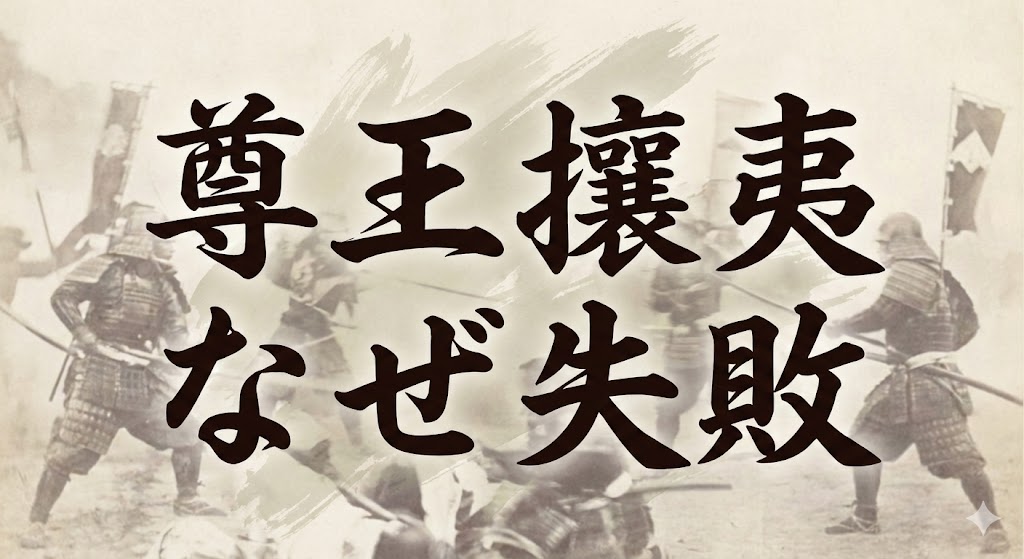
The Sonno Joi (Revere the Emperor, Expel the Barbarians) movement drenched Bakumatsu Kyoto in blood. However, this radical terrorism quickly collapsed. Despite their fervent ideals, the extremists faced ruthless security crackdowns by the Shogunate and the Aizu domain. Furthermore, Emperor Komei himself vehemently rejected their chaotic violence. Ultimately, a fatal disconnect between magical thinking and cold political reality triggered the movement’s catastrophic self-destruction.
Radical loyalists plunged Kyoto into violent chaos. Executing political assassinations known as Tenchu, they ruthlessly terrorized the capital, even displaying the severed head of Shogunate sympathizer Shimada Sakon on the Kamo Riverbank. Consequently, this rampant terrorism completely shattered the Tokugawa Shogunate’s once-absolute authority, transforming the imperial capital into a lawless bloodbath.
Driven into a corner, the 14th Shogun, Tokugawa Iemochi, desperately sought survival through the Kobu Gattai policy. Breaking a 200-year precedent, he personally traveled to Kyoto. However, radical court nobles like Sanjo Sanetomi greeted him with severe hostility rather than cooperation. Therefore, to restore his authority, Iemochi humiliatingly promised an impossible deadline for expelling foreigners, essentially tying his own political noose.
🟢 Key Takeaways 🟢
Rampant terrorism effectively destroyed Shogunal control in Kyoto. Iemochi’s desperate attempt to borrow Imperial authority resulted in a humiliating political defeat, forcing him to make impossible anti-foreign promises to appease radical nobles.
The Shogunate did not simply surrender to this chaos. Appointing Aizu domain lord Matsudaira Katamori as the Kyoto Shugoshoku, the government initiated a massive security crackdown. He deployed the Shinsengumi, a formidable police force led by Kondo Isami. Consequently, their relentless, bloody suppression of extremists forcefully reestablished Shogunate military authority within the lawless capital.
More decisively, Emperor Komei’s personal intentions sealed the radicals’ fate. Although the Emperor despised foreigners, he deeply valued traditional order and absolutely abhorred the extremists’ chaotic violence. Terrified of becoming their political puppet, the Emperor secretly allied with the Aizu and Satsuma domains to execute the Hachigatsu Juhachi-nichi no Seihen. Therefore, this sudden coup completely expelled the radical Choshu faction from Kyoto, dramatically reversing the political tide overnight.
🟢 Key Takeaways 🟢
Despite claiming to champion the Emperor, the radicals disgusted him with their lawless violence. The combination of fierce Shogunate police action and the Emperor’s explicit rejection successfully eradicated the extremist presence in Kyoto.
A fatal reliance on Magical Thinking severely crippled the revolutionary movement. For instance, the Tosa Kinnoto absurdly attempted to extort funding from merchants by faking ritual suicide, perfectly illustrating their profound detachment from reality. Comprised mostly of frustrated youths, these radicals prioritized their rebellious passion entirely over objective political feasibility.
This delusion climaxed with the Choshu domain’s reckless blockade of the Shimonoseki Straits. They actively bombarded passing foreign vessels, attempting to single-handedly execute the impossible expulsion order. Unsurprisingly, a combined Western fleet retaliated heavily, inflicting a crushing military defeat upon Choshu. Similarly, the Mito domain’s Tenguto Rebellion ended in brutal suppression. Ultimately, their internationally ignorant passion proved utterly powerless against cold, physical military force.
🟢 Key Takeaways 🟢
The radical patriots operated entirely on ideological delusions and profound international ignorance. Their reckless military provocations against advanced Western fleets predictably resulted in catastrophic defeats, effectively isolating and destroying their own movement from within.
The complete failure of the Sonno Joi movement resulted from radical extremism crashing into cold institutional power. Facing an unprecedented crisis, the Shogunate restored order via the Aizu domain, while the Emperor himself stripped the radicals of their righteous cause. The main points of this article are:
‣ Emperor Komei explicitly rejecting the chaotic radicals.
‣ Magical thinking causing the self-destruction of extremist factions.
We hope analyzing this rapid ideological collapse helps you recognize the severe dangers of prioritizing pure passion over objective political reality.
Q1. Why did Shogun Iemochi take the massive risk of traveling to Kyoto?
To desperately compensate for the Shogunate’s rapidly declining authority, he needed to successfully execute the “Kobu Gattai” policy. By meeting the Emperor directly, he intended to project a powerful image of national unity and Shogunal cooperation.
Q2. Was Emperor Komei actually opposed to expelling foreigners?
No, the Emperor intensely despised foreign presence. However, he prioritized traditional domestic order and continuous cooperation with the Shogunate above all else, absolutely refusing to support the violent, chaotic terrorism championed by the radicals.
Q3. What modern lesson can we learn from this historical failure?
It perfectly demonstrates the extreme danger of believing one’s ideology represents absolute justice while entirely ignoring objective circumstances. Fervent enthusiasm frequently clouds judgment, ultimately causing organizations to violently self-destruct from within.
コメント欄