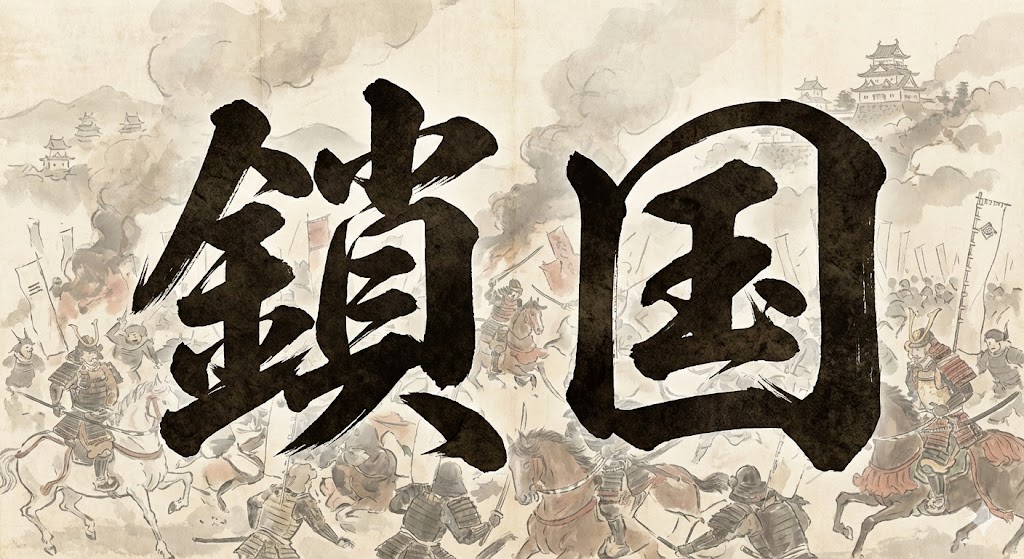
By 1720, Edo had exploded into the world’s largest metropolis, boasting 1.2 million residents. However, this unprecedented prosperity masked a ruthless control system. The Shogunate forced regional lords to leave their families as hostages and strictly enforced the paralyzing Buke Shohatto laws. Furthermore, fearing colonial subjugation, the regime decisively banned Christianity and finalized the Sakoku isolation system. Ultimately, these extreme policies did not merely suppress religion; they systematically monopolized lucrative global trade, permanently cementing Tokugawa supremacy.
Around 1720, Edo transformed into a massive megacity, completely dwarfing major European capitals. However, cold political calculation firmly underpinned this remarkable urban prosperity. Tokugawa Ieyasu (The system architect) strictly mandated the alternate attendance system, requiring regional daimyo to leave their families in the capital as Hitojichi. Consequently, any regional uprising guaranteed the immediate execution of the lord’s entire family lineage.
Furthermore, the Shogunate deployed the severe Buke Shohatto to legally paralyze the warlords. This strict legal code completely banned private political alliances and unauthorized military upgrades. To enforce absolute compliance, the government dispatched powerful inspectors across the nation. Therefore, while urban economics flourished spectacularly, an oppressive dual structure of mutual surveillance and paralyzing fear successfully maintained an unbreakable 250-year peace.
🟢 Key Takeaways 🟢
Edo’s unprecedented growth masked a deeply oppressive political framework. The hostage system and strict legal codes effectively crushed any rebellious intent, proving that Tokugawa’s peace relied heavily on absolute, systemic intimidation.

The Tokugawa Shogunate deeply feared the imperialistic ambitions lurking behind the Iezusu-kai. They acutely suspected these missionaries actively functioned as colonial vanguards for Spain and Portugal. More importantly, the Shogunate feared that religious believers prioritizing God over the Shogun would fatally fracture national unity. When the 1614 prohibition edict dropped, desperate believers transformed into Kakure Kirishitan, secretly disguising the Virgin Mary as Buddhist deities to survive.
However, the devastating Shimabara-no-Ran in 1638 forced a decisive, violent turning point. Deeply shocked by this massive uprising, the Shogunate resolved to completely eradicate Christianity. They implemented ruthless interrogations and legally forced all citizens into strict temple registries. Therefore, this severe crackdown represented a calculated political defense strategy to surgically remove dangerous foreign influence, rather than mere religious persecution.
🟢 Key Takeaways 🟢
The Shogunate viewed Christianity strictly as a highly dangerous political weapon of foreign imperialism. By crushing the Shimabara Rebellion and suppressing hidden believers, the regime aggressively secured absolute, undivided domestic loyalty.

Initially, Ieyasu actively encouraged the Shuinsen Boeki, allowing powerful regional lords to engage in highly lucrative international commerce. However, this policy carried fatal systemic risks. The Shogunate became terrified that western warlords would amass immense, independent wealth to challenge the central government. Consequently, the third Shogun, Iemitsu, radically shifted policy, strictly restricting all foreign trade to the directly controlled port of Nagasaki.
While strictly expelling Catholic nations, the Shogunate maintained exclusive, highly profitable relations with Oranda. Because these Protestant merchants prioritized commercial profit entirely over proselytization, they presented zero political threat. Consequently, this calculated isolation perfectly blocked dangerous religious influence while funneling all global trade profits directly into the Shogun’s treasury. Therefore, Sakoku functioned as a brilliant economic blockade designed to permanently starve rival warlords.
🟢 Key Takeaways 🟢
Sakoku functioned as an advanced economic monopoly rather than a fearful retreat. By exclusively controlling the Nagasaki trade window, the Tokugawa clan brilliantly secured both absolute religious safety and overwhelming financial supremacy.
── Finally, let's recap with the summary and FAQ of this article.
The Tokugawa Shogunate engineered an unprecedented control system from their mega-metropolis of Edo. By combining the terrifying hostage system with ruthless religious and economic isolation, they effectively neutralized both domestic and international threats. The main points of this article are:
‣ Banning Christianity to preempt colonial subjugation.
‣ Monopolizing global trade via the Sakoku policy.
We hope analyzing this comprehensive system of control provides valuable insights into how absolute monopolies are constructed and maintained.
Q1. Just how massive was Edo’s urbanization?
By 1720, Edo’s population reached a staggering 1.2 million, completely surpassing major European capitals like London and Paris, and granting Japan a higher urbanization rate than the entirety of Europe.
Q2. Why did the Shogunate fear Christianity to such an extreme degree?
They strictly viewed missionaries as dangerous vanguards for European colonization. Furthermore, the Shogunate recognized that unified believers prioritizing loyalty to God over the Shogun posed a fatal threat to national unity.
Q3. Was Japan completely isolated from the world during Sakoku?
No. The Shogunate actively continued highly profitable trade with the Dutch and Chinese exclusively through Nagasaki. It was not a hermetic seal, but rather a strictly managed, government-run economic monopoly.
コメント欄