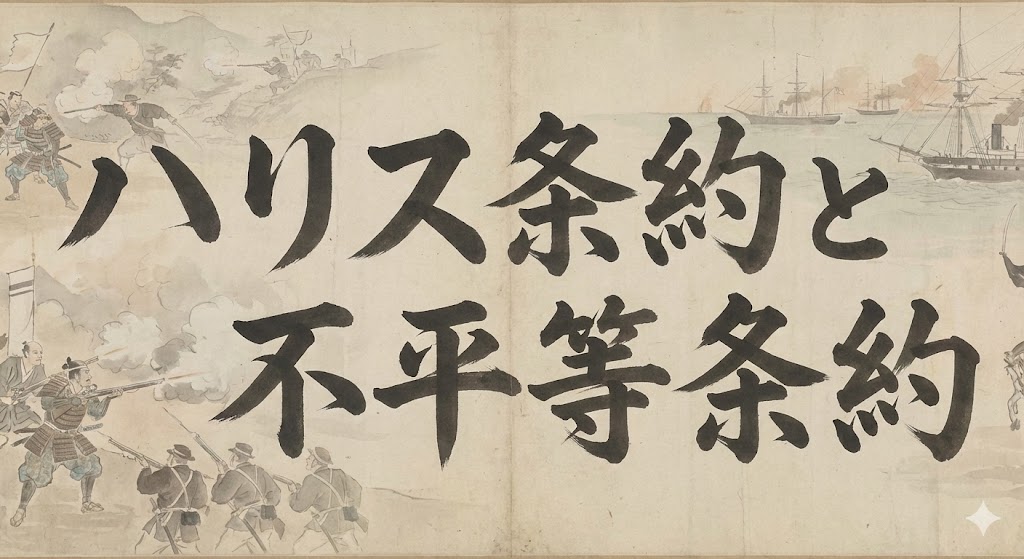
Commodore Perry’s arrival plunged the Edo Shogunate into absolute panic, ultimately forcing the signing of the Treaty of Kanagawa. However, this merely initiated Japan’s subjection to informal imperialism. Subsequently, utilizing the terrifying military threat of the British fleet, Consul Townsend Harris ruthlessly cornered the Shogunate into signing the Harris Treaty. This unequal agreement systematically stripped Japan of its tariff autonomy and legal sovereignty. Furthermore, signing without imperial consent provoked Emperor Komei’s absolute fury, irreversibly igniting the chaotic downfall of the Tokugawa regime.
Perry’s imposing Black Ships instantly threw Edo Castle into unprecedented panic. Lacking absolute confidence, Chief Councilor Abe Masahiro broke centuries of strict Shogunate protocol by actively soliciting opinions from all regional daimyo. Consequently, this desperate move fatally exposed the central government’s crippling weakness. Unable to formulate a viable defense, the paralyzed Shogunate eventually submitted, signing the Nichibei Washin Joyaku to officially open Shimoda and Hakodate.
However, this initial concession merely marked the beginning of Western Hikoshiki Teikokushugi in Japan. Western powers brilliantly avoided the massive financial burdens of direct territorial conquest. Instead, they weaponized their overwhelming military superiority to construct highly exploitative legal systems. Therefore, exactly like Qing China, Japan was violently dragged into a humiliating era of unequal treaties designed strictly to siphon domestic wealth into foreign empires.
🟢 Key Takeaways 🟢
Bowing to Perry’s overwhelming military pressure, the Shogunate officially terminated national isolation. However, this did not initiate an era of equal international partnership. Instead, it forcefully inducted Japan into a ruthless system of informal imperialism, where foreign powers utilized diplomatic coercion for unilateral economic exploitation.

Establishing his consulate at Gyokusen-ji in Shimoda, Townsend Harris proved to be a remarkably aggressive and persistent negotiator. He stubbornly demanded a direct audience with the Shogun to deliver the President’s letter, refusing to yield for 18 agonizing months. Once he finally secured this unprecedented Edo meeting, he immediately launched his primary objective: forcing the Shogunate to sign the Nichibei Shuko Tsusho Joyaku.
To crush Japanese resistance, Harris strategically weaponized global terror. He ominously warned that the invincible British fleet, fresh from devastating China in the Opium War, was actively sailing toward Japan. Surprisingly, he presented himself as a peaceful savior, arguing that signing with America would protect Japan from far harsher British demands. Intimidated, the Shogunate surrendered. This devastating treaty opened major ports like Yokohama and Hyogo while granting foreigners absolute Ryoji Saibanken, humiliatingly preventing Japan from prosecuting foreign criminals on its own soil.
🟢 Key Takeaways 🟢
Harris brilliantly utilized the terrifying specter of British military aggression to force Tokugawa compliance. By granting extraterritoriality, the Shogunate humiliatingly surrendered a fundamental pillar of national sovereignty, legally elevating foreigners above Japanese law.

The Harris Treaty also delivered a catastrophic economic poison. The agreement completely stripped Japan of its Kanzei Jishuken. Consequently, the government lost the vital ability to impose protective tariffs, leaving domestic industries totally defenseless against a flood of cheap Western manufactured goods. Furthermore, the inclusion of Henmuteki Saikeikoku Taigu guaranteed that Japan remained trapped in a permanent, inescapable web of diplomatic disadvantage.
Subsequently, the Shogunate signed identical unequal agreements with Britain, France, Russia, and the Netherlands (The Ansei Five-Power Treaties). However, opening the port of Hyogo (Kobe)—located dangerously close to the imperial capital of Kyoto—ignited absolute fury within Komei Tenno. Because the Shogunate finalized these humiliating treaties without securing explicit imperial consent (Chokkyo), the Emperor’s profound distrust immediately catalyzed radical, violent movements aimed at destroying the Tokugawa regime.
🟢 Key Takeaways 🟢
The forced surrender of tariff autonomy severely crippled Japan’s economic defenses. Furthermore, executing these humiliating diplomatic capitulations without the Emperor’s blessing irreversibly shattered the Shogunate’s political legitimacy, directly sparking the chaotic violence of the Bakumatsu era.
── Finally, let's recap with the summary and FAQ of this article.
While Perry violently unlocked Japan’s doors, Harris ruthlessly dismantled its sovereignty. The catastrophic loss of legal jurisdiction and economic autonomy created monumental national crises that Japan would spend the entire Meiji era desperately trying to resolve. The main points of this article are:
‣ Extraterritoriality and lost tariff autonomy crippled national sovereignty.
‣ Bypassing imperial consent ignited intense, regime-ending political fury.
We hope understanding the brutal mechanics of these unequal treaties illuminates the immense external pressures that forcefully birthed modern Japan.
Q1. Why did Abe Masahiro ask the regional daimyo for their opinions?
Facing an entirely unprecedented foreign threat, he lacked the confidence to make a unilateral decision. However, this desperate attempt at consensus completely exposed the Shogunate’s weakness, irreversibly destroying its image of absolute authority.
Q2. What is the fundamental difference between the two treaties?
The Treaty of Kanagawa primarily focused on basic survival needs, securing coal, water, and safe harbor for American ships. Conversely, the Harris Treaty initiated full-scale commercial trade while embedding deeply unequal, sovereignty-stripping conditions.
Q3. Why was Emperor Komei so violently opposed to the treaties?
Beyond his intense personal xenophobia, he felt profound, existential dread regarding the opening of Hyogo (modern-day Kobe). Its close geographical proximity to the sacred imperial capital of Kyoto made the foreign presence feel like an immediate, intolerable threat.
コメント欄