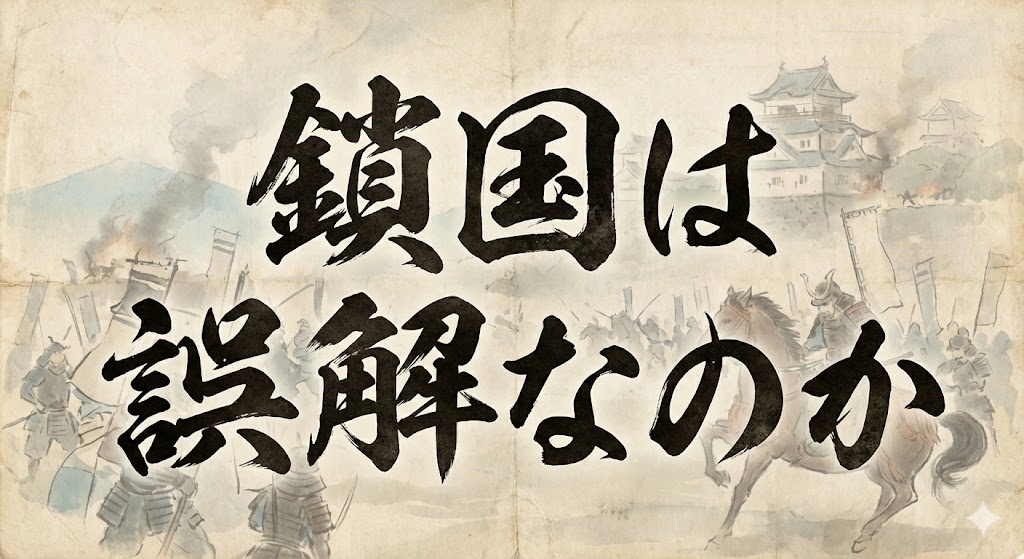
The term “Sakoku” heavily implies that Edo-period Japan was completely isolated from the world. Surprisingly, this is a massive historical misconception. In reality, the Tokugawa Shogunate meticulously managed four specific diplomatic windows—the Dutch, China, Korea, and the Ryukyu Kingdom—to absolutely monopolize trade profits and ensure domestic stability. By exploring the vibrant cultural exchanges with Korean emissaries and the strategic domination of the Ryukyu Kingdom, we uncover the calculating, highly strategic reality behind Japan’s so-called “closed doors.”
Many believe Japan completely severed itself from the globe. However, the Tokugawa Bakufu targeted managed access rather than total isolation. The 1635 Sakoku-rei issued by Tokugawa Iemitsu (The third Shogun) served a dual, highly strategic purpose. It aggressively eliminated the dangerous colonial threat of Catholicism while ensuring the Shogunate absolutely monopolized all lucrative foreign trade revenues.
Consequently, Seijiteki Antei drove every diplomatic decision. The government ruthlessly systematically blocked western warlords from independently amassing wealth through unauthorized foreign commerce. Therefore, the Shogunate brilliantly engineered a sophisticated four-window diplomatic system: Nagasaki hosted the Dutch and Chinese, while separate, strictly monitored routes connected Japan to Korea and the Ryukyu Kingdom.
🟢 Key Takeaways 🟢
“Sakoku” did not mean a closed country; it signified an absolute state monopoly on foreign relations. By strictly controlling information flow and trade revenues, this sophisticated management system successfully fortified Tokugawa political supremacy.

Following Hideyoshi’s devastating invasions, a 1609 treaty and the dedicated mediation of the So-shi (The island diplomats) successfully repaired diplomatic ties. Consequently, the magnificent Chosen Tsushinshi visited Japan twelve times, deploying elite delegations of 300 to 500 scholars and officials. Furthermore, prominent Japanese intellectuals like Arai Hakuseki (The erudite scholar) engaged them in highly sophisticated cultural exchanges and poetry sessions.
In 1719, Korean official Sin Yu-han marveled at the overwhelming material prosperity of Osaka and Edo. Behind the scenes, however, immense diplomatic friction existed. Japan boastfully told the Dutch that Korea was a subordinate vassal, while Korean delegates privately mocked the Japanese as mere pirate descendants. Surprisingly, despite this official political tension, Japanese commoners enthusiastically welcomed the delegates, desperately seeking their calligraphy as sacred treasures.
🟢 Key Takeaways 🟢
While government officials maintained a facade of mutual superiority, grassroots cultural and economic exchanges thrived immensely. This pragmatic, mature relationship proves that the maritime borders between Japan and Korea remained dynamically open.

Following unification by Sho Hashi (The founding king), the Ryukyu Okoku accumulated staggering wealth as East Asia’s premier clearinghouse. Leveraging Chukei Boeki, they developed a unique hybrid culture where administrators wore Chinese-style robes alongside Japanese samurai swords. However, the aggressive arrival of European Portuguese merchants in the late 16th century severely eroded this strategic trade advantage.
By the 1600s, Ryukyu’s independence became fatally compromised. In 1606, Ieyasu authorized a punitive military expedition against the kingdom by the powerful Satsuma domain. Why did a Japan determined to avoid foreign wars actively launch this invasion? Ultimately, it represented a coldly calculated imperial expansion, brutally exploiting an overwhelming military disparity to hijack Ryukyu’s remaining trade revenues.
🟢 Key Takeaways 🟢
Ryukyu thrived immensely as an independent trade hub. However, shifting global economics and aggressive Japanese military expansion tragically stripped the peaceful kingdom of its freedom, demonstrating the harsh realities of geopolitical power.
── Finally, let's recap with the summary and FAQ of this article.
Edo-period Japan never completely isolated itself from the globe. To permanently secure their political foundation, the Shogunate strategically monopolized both foreign intelligence and trade profits. The main points of this article are:
‣ Emissaries facilitated deep cultural connections with Korea.
‣ Military aggression violently hijacked Ryukyu’s intermediary trade.
We hope recognizing the strategic brilliance behind these diplomatic policies dismantles the outdated myth of a completely closed, ignorant Japan.
Q1. Why were the Portuguese expelled from Japan?
The Shogunate accurately perceived Catholic missionary work as a highly dangerous vanguard for Spanish and Portuguese colonial subjugation. Therefore, they expelled them to eliminate a fatal threat to the existing political order.
Q2. What was the diplomatic difference between China/Holland and Korea?
China and the Netherlands engaged solely in strictly regulated commercial trade at Nagasaki. Conversely, Japan maintained formal, equal state-to-state diplomatic relations with Korea specifically through the Tsushima domain.
Q3. Did the term “Sakoku” exist during the early Edo period?
Surprisingly, no. It is an artificial term coined by a later translator. At the time, the policies simply represented strict maritime prohibitions and travel restrictions, lacking any conscious concept of totally isolating the nation.
コメント欄