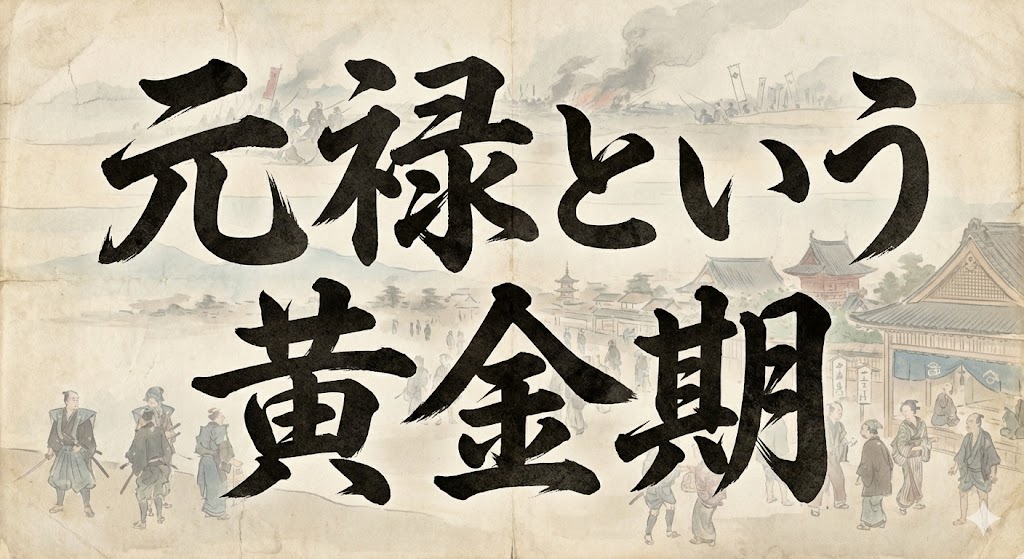
The Genroku period, commencing in 1688, marked the absolute economic and cultural zenith of the Edo era. However, prolonged peace systematically transformed samurai from fierce warriors into desk-bound bureaucrats, creating severe identity crises within the rigid social hierarchy. Consequently, lost warriors desperately sought new ideological foundations through Yamaga Soko’s Confucian “Shido” and Yamamoto Tsunetomo’s radical “Hagakure.” Ultimately, behind this dazzling urban prosperity, the quiet, structural decline of the samurai class had already begun.
The Genroku era universally symbolizes the ultimate climax of Edo prosperity. During this prolonged peace, vibrant urban cultures like Kabuki and Ukiyo-e flourished spectacularly. However, brilliant light inevitably casts dark shadows. Beneath this dazzling surface, the rigid Hoken Shakai secretly bred deep structural resentment.
Highly capable commoners and impoverished lower-class samurai found themselves permanently blocked by an impenetrable wall of hereditary privilege. Consequently, immense, suppressed frustration began accumulating within the lower social strata. Therefore, the explosive revolutionary energy that eventually dismantled the Shogunate decades later actually originated amidst this seemingly perfect golden age.
🟢 Key Takeaways 🟢
The Genroku era simultaneously delivered peak cultural prosperity and initiated the regime’s structural decay. The rigid feudal system’s inability to reward merit generated a quiet, deeply rooted frustration that ultimately doomed the Tokugawa system.
The eradication of war entirely eliminated the samurai’s original occupational purpose. These former warriors rapidly transformed into desk-bound Kanryo, managing paperwork while still wearing their ancestral swords. However, their desperate clinging to outdated military privileges appeared highly comical to the capable merchant class, who frequently mocked their irrelevance as mere Daimyo no Gei.
To resolve this severe existential crisis, Yamaga Soko (The moral philosopher) radically redefined the warrior’s purpose. He strategically utilized Confucianism to position the samurai as moral exemplars destined to guide the common masses. Therefore, by replacing physical combat with absolute ethical leadership, Soko successfully provided a new, desperately needed intellectual justification for the samurai’s continued societal dominance.
🟢 Key Takeaways 🟢
Prolonged peace stripped the samurai of their martial utility, reducing them to heavily armed bureaucrats. Soko’s philosophy ingeniously salvaged their pride by shifting their core identity from battlefield executioners to indispensable moral leaders.
Conversely, Yamamoto Tsunetomo (The radical traditionalist) reacted to this peaceful complacency with absolute fury. Lamenting a society that even outlawed ritual suicide for fallen lords, he dictated the controversial text, Hagakure. His famous declaration that “Bushido is found in death” did not promote simple suicidal ideation. Rather, it served as a violently powerful antithesis to the era’s suffocating, bureaucratic comfort.
Tsunetomo aggressively advocated for Shini-gurui, urging warriors to abandon over-intellectualized logic. Heavily influenced by Zen principles, this philosophy demanded intense, fearless concentration on the present moment. Ultimately, by constantly visualizing their own demise, Tsunetomo believed samurai could instantly sever earthly hesitations and reclaim their pure, original martial vitality.
🟢 Key Takeaways 🟢
Hagakure aggressively challenged the domesticated samurai by demanding absolute, death-defying devotion. Tsunetomo’s radical philosophy utilized the constant awareness of death as a paradoxical psychological tool to inspire intense, unhesitating action in the present.
The Genroku era delivered Japan’s ultimate golden age, yet it simultaneously signaled the obsolescence of the warrior class. The massive psychological gap between bureaucratic reality and martial ideals generated profound internal conflicts. The main points of this article are:
‣ Unemployed warriors securing identity through moral leadership.
‣ Hagakure demanding intense present-action through the awareness of death.
We hope recognizing these subtle signs of systemic change amidst prosperity helps you identify similar shifts in modern societal structures.
Q1. Exactly when did the Genroku era occur?
It technically spanned from 1688 to 1704. This timeline perfectly aligned with the reign of Tokugawa Tsunayoshi, witnessing an explosive development of vibrant merchant and urban culture.
Q2. What is the precise difference between “Shido” and “Bushido”?
“Shido” represents a Confucian-based moral philosophy demanding samurai act as ethical, guiding gentlemen. Conversely, “Bushido” emphasizes absolute, unconditional devotion to a lord and a high spiritual readiness for death.
Q3. Why did the samurai begin to decline during the prosperous Genroku period?
Prolonged peace completely eradicated their primary function as combatants, destroying their existential purpose. Furthermore, surging commercial economies transferred massive practical wealth to merchants, leaving fixed-income samurai in severe relative poverty.

コメント欄