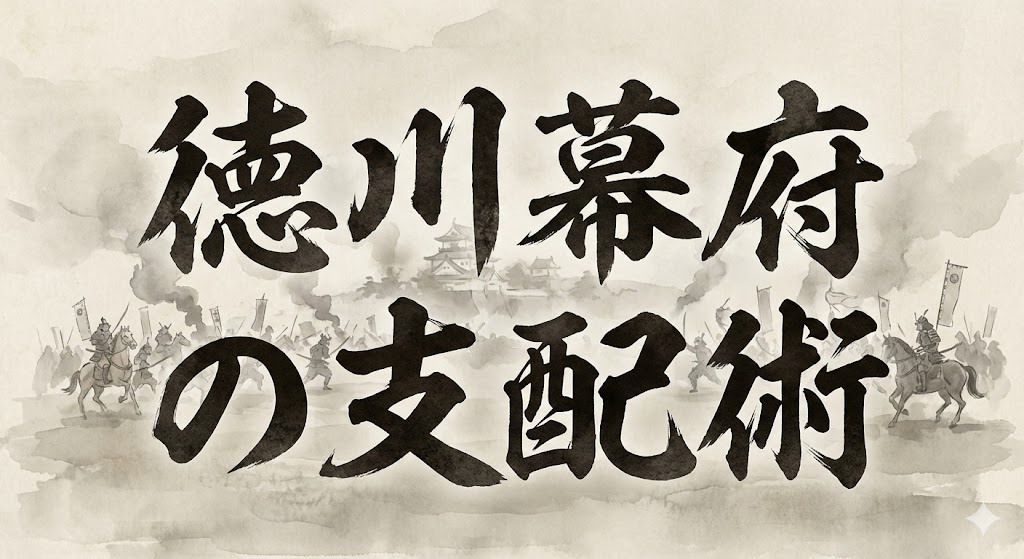
Before his death in 1616, Tokugawa Ieyasu (The system architect) constructed an unbreakable governing framework that secured 260 years of absolute peace. This ingenious system masterfully categorized regional lords to enforce strict mutual surveillance. Furthermore, aggressively combining heavy financial burdens like alternate attendance with strict legal territorial restrictions thoroughly neutralized military threats. Ultimately, this brilliant “carrot and stick” strategy perfectly transformed the chaotic warrior class into dependent, compliant administrators.
Ieyasu meticulously categorized his allies and enemies into three distinct ranks. The Shinpan acted as vital biological reserves for the Shogunal bloodline. Simultaneously, deeply trusted Fudai lords monopolized all central political administration. Conversely, the powerful Tozama received massive domains but suffered complete exclusion from political decision-making. Therefore, this highly calculated hierarchy successfully eradicated any structural opportunities for internal rebellion.
Furthermore, restricting core government roles exclusively to Fudai lords perfectly protected state secrets. By deliberately positioning the militarily potent Tozama completely outside the political center, Ieyasu actively avoided the fatal structural flaws of the preceding Toyotomi regime. Consequently, this brilliant policy of segregation and specialized roles guaranteed absolute, long-term stability.
🟢 Key Takeaways 🟢
Ieyasu engineered a self-regulating system through strict categorical segregation. Delegating national politics solely to loyalists while legally barring powerful newcomers established a flawless mutual surveillance network, permanently preventing internal collapse.

Ieyasu aggressively weaponized land distribution. For instance, he utilized Tenpo to forcibly relocate the Tozama Yamanouchi clan into hostile, recently conquered territory. Consequently, governing this rebellious local population forced the Yamanouchi to rely absolutely on Shogunate authority for their own survival. Moreover, the Shogunate heavily monopolized all lucrative economic hubs as Tenryo, systematically securing immense direct national wealth.
Additionally, the strict Ikkoku Ichijo-rei physically dismantled regional military capabilities. However, in exchange for absolute submission to these severe rules, the Shogunate guaranteed local autonomy and guaranteed dynastic continuity. Therefore, this masterful “carrot and stick” diplomacy essentially formed an overarching protection pact, compelling warlords to embrace peaceful subservience over the fatal risks of rebellion.
🟢 Key Takeaways 🟢
Strategic relocations and economic monopolies systematically stripped lords of their independent power bases. Offering local autonomy in exchange for absolute obedience successfully forced formidable warlords into permanent, peaceful dependence.

The Sankin-kotai system functioned as a devastating financial weapon. This strict law mandated lords to maintain highly expensive Edo Hantei compounds and fund massive, luxurious biennial travel processions. Therefore, this enormous mandated expenditure effectively drained regional treasuries, completely eliminating any surplus capital required to fund military rebellions.
Surprisingly, this oppressive policy generated a massive, unintended economic boom. The constant influx of thousands of samurai systematically triggered unprecedented Wealth Redistribution from the provinces to the capital. Consequently, rapidly expanding service industries emerged to meet this massive localized demand, miraculously transforming the marshy village of Edo into one of the world’s largest, most vibrant consumption megacities.
🟢 Key Takeaways 🟢
Alternate attendance brilliantly neutralized military threats through forced financial exhaustion. Ironically, this oppressive control mechanism fueled explosive urban development, directly engineering Edo’s historic golden age of commerce and culture.
── Finally, let's recap with the summary and FAQ of this article.
The Tokugawa Shogunate’s 260-year reign resulted from meticulous systemic engineering, not mere historical coincidence. By legally classifying lords, weaponizing geographic placement, and enforcing strict financial exhaustion, Ieyasu perfectly neutralized the warring states. The main points of this article are:
‣ Enforced Shogunate dependence through strategic domain relocations.
‣ Military neutralization and urban explosive growth via Sankin-kotai.
We hope analyzing this brilliant control system provides you with valuable insights into the mechanics of long-term organizational stability and risk management.
Q1. What was the absolute primary difference between Fudai and Tozama Daimyo?
Political access dictates the difference. Fudai lords exclusively held powerful Shogunate administrative posts, while Tozama lords were strictly excluded from national politics, regardless of their immense territorial wealth.
Q2. Did the Sankin-kotai rules apply equally to every single domain?
No. The Shogunate pragmatically established exceptions. Remote border lords, such as the Matsumae in Hokkaido or the So clan in Tsushima, received significantly reduced attendance requirements to focus on vital frontier defense.
Q3. Why did powerful warlords accept this oppressive system instead of rebelling?
The system guaranteed family continuity. By trading absolute military independence for Shogunate protection, lords successfully eliminated the fatal, constant risk of annihilation that characterized the preceding Sengoku period.

コメント欄