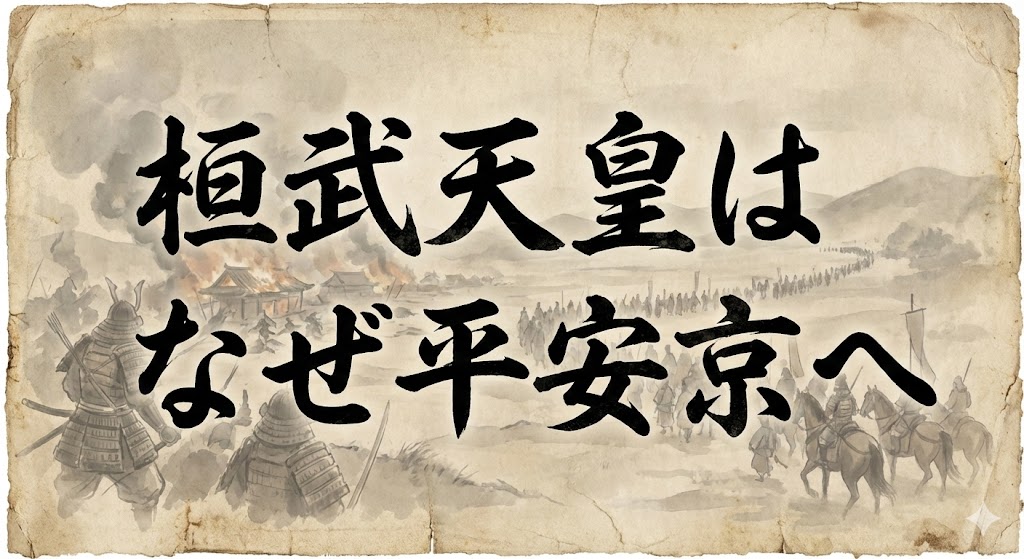
The late 8th century witnessed a drastic geographic shift in Japanese politics. Kanmu Tenno forcibly relocated the capital to Nagaoka-kyo, and later Heian-kyo, to escape the suffocating influence of powerful Nara temples and entrenched aristocrats. Following a bloody assassination and ruthless political purges, the administration successfully established a powerful direct imperial rule, laying the unshakeable foundation for a millennium-long capital.
Kanmu Tenno (The resolute monarch) took the throne with relatively weak ancestral backing. Therefore, the deeply rooted Buddhist factions and Kitokukeneki in Nara severely restricted his political authority. To completely shatter these old constraints, his administration executed an unprecedented geographic relocation.
Consequently, Fujiwara no Tanetsugu (The trusted architect) forced the construction of Nagaoka-kyo. This massive project strategically imposed crippling economic burdens on rival clans while shifting the political base closer to imperial allies. Ultimately, this capital relocation functioned as a calculated weapon for absolute power rather than a simple change of residence.
🌿 Key Takeaways 🌿
Geographic shifts can dismantle entrenched power. The relocation to Nagaoka-kyo deliberately bankrupted rival aristocratic factions and physically separated the emperor from the suffocating political interference of Nara’s massive religious institutions.

However, severe natural disasters and a shocking murder completely derailed the Nagaoka-kyo project. Unknown assailants assassinated Tanetsugu during construction. Consequently, Kanmu Tenno utilized this tragic event to ruthlessly purge his political enemies.
The administration swiftly accused the Otomo-shi and other prominent military clans of the crime, permanently dismantling their central influence. Surprisingly, the emperor even exiled his own brother, Sawara Shinno (The tragic brother), ensuring a smooth succession for his own son. Ultimately, this ruthless political purge successfully eliminated all major rivals, rapidly solidifying Kanmu’s absolute dictatorship.
🌿 Key Takeaways 🌿
Tragedy provides the perfect cover for political purges. The emperor masterfully weaponized the assassination of his top minister to permanently eradicate rival clans and secure his direct bloodline’s claim to the throne.

Following the Nagaoka-kyo failure, the administration permanently relocated to Heian-kyo in 794. The Kamogawa provided excellent water transportation, ensuring robust logistical and economic stability for the new city.
By this time, the aging Kanmu Tenno had already eradicated all vocal opposition. Therefore, he deliberately left ministerial positions vacant and exclusively promoted loyal insiders. Consequently, this geographic isolation and massive political restructuring successfully realized absolute Shinsei. Ultimately, Heian-kyo provided the perfect, unshakeable foundation for the emperor to lead the nation without any aristocratic interference.
🌿 Key Takeaways 🌿
Absolute power requires a secure stronghold. Heian-kyo offered the ideal geographic and economic environment for Kanmu Tenno to finalize his vision of a highly centralized government completely dominated by the emperor himself.

── Finally, let's recap with the summary and FAQ of this article.
The successive capital relocations operated as a desperate, decisive political strategy to sever the crippling influence of Nara Buddhism and entrenched aristocrats. The main points of this article are:
✅ A tragic assassination provided the perfect excuse to purge all rivals.
✅ Heian-kyo successfully established the foundation for direct imperial rule.
We hope this historical deep dive illustrates how geographic shifts and ruthless pragmatism can forge a lasting political legacy.
Q1. Why did Kanmu Tenno abandon Nara?
Geographic distance physically severed the overwhelming political interference from powerful, entrenched Buddhist temples and ancient aristocratic clans, allowing him to consolidate absolute power.
Q2. Who was Fujiwara no Tanetsugu?
He served as the emperor’s most trusted aide and the chief architect of Nagaoka-kyo. His shocking assassination inadvertently provided the administration with a perfect justification to violently purge all political opposition.
Q3. Why did Heian-kyo survive as the capital for over a millennium?
Surrounding mountains provided excellent natural defense, while nearby river systems like the Kamogawa guaranteed robust logistical and economic lifelines, creating the ultimate geographic foundation for long-term political stability.



コメント欄