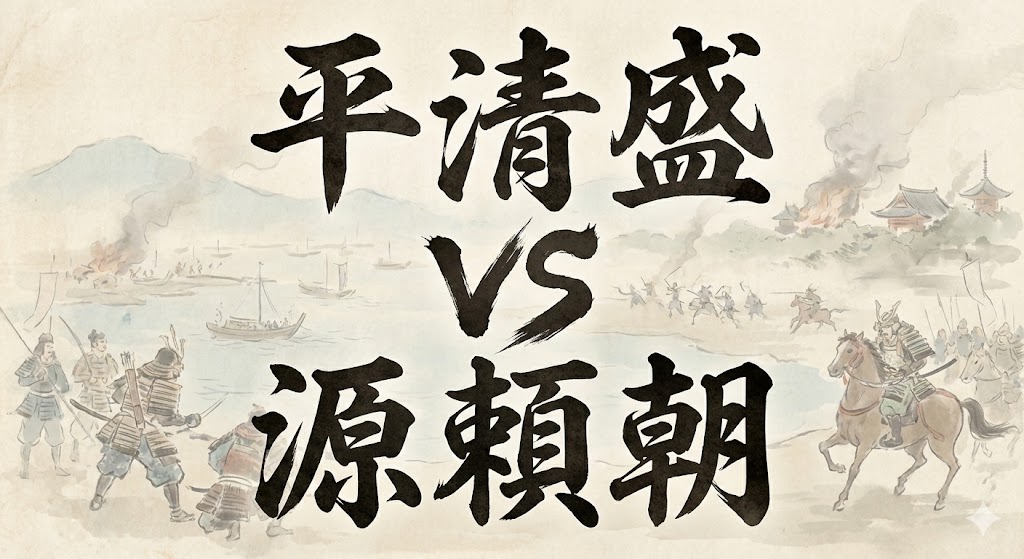
The Genpei War definitively transitioned Japan from aristocratic rule to a samurai-led society. Taira no Kiyomori seized unprecedented power through ruthless military force and marriage politics, ultimately alienating traditional institutions. Conversely, Minamoto no Yoritomo established a revolutionary, unshakeable alliance with eastern warriors by guaranteeing their land rights, successfully opening the door to a new era.
Historically, Kyoto’s political struggles usually ended in mild banishments. However, Taira no Kiyomori (The ambitious dictator) utterly destroyed these passive conventions. He ruthlessly executed his rivals and established a terrifying absolute dictatorship through overwhelming military force. Consequently, this unparalleled martial supremacy forced the existing Kenmon system to completely submit to his singular will.
Furthermore, Kiyomori’s ambitions extended far beyond military dominance. He married his daughter into the imperial family and eventually placed his own grandson on the emperor’s throne. By aggressively seizing the title of Daijo-daijin, he bypassed traditional advancement protocols to monopolize high-ranking positions. Unsurprisingly, this rapid, forceful infiltration ignited fierce hatred throughout the entire aristocratic society.
🔍 Key Takeaways 🔍
Kiyomori was not a visionary revolutionary. Instead, his aggressive nepotism and violence simply aimed to make him the ultimate authority within the outdated aristocratic framework—much like a hostile corporate takeover.

Kiyomori’s absolute dictatorship eventually alarmed even his former ally, Go-Shirakawa Joko (The cloistered sovereign). When tensions peaked, Kiyomori executed a shocking coup d’état, imprisoning the retired emperor. Subsequently, he forced an abrupt relocation of the capital to Fukuhara-kyo. This reckless abandonment of Kyoto deeply alienated the nobility and turned powerful religious factions into bitter enemies.
The simmering resentment finally exploded when Mochihito-o (The catalyst prince) issued a formal decree to overthrow the Taira. Although loyalist forces quickly crushed this initial uprising, the sudden realization of Taira vulnerability rapidly spread across the country. Consequently, disgruntled local samurai launched simultaneous uprisings nationwide, plunging Kiyomori’s final years into an endless, unwinnable war.
🔍 Key Takeaways 🔍
Fear-based governance generates only superficial stability. By carelessly discarding tradition and alienating religious institutions, Kiyomori’s regime entirely lost its political legitimacy, triggering an unstoppable rebellion.

Twenty years of harsh exile in Izu profoundly shaped Minamoto no Yoritomo (The pragmatic exile). There, he directly absorbed the genuine frustrations of the eastern warriors. Unlike Kyoto’s elites, these local samurai craved guaranteed ownership of their fiercely cultivated lands, not empty court titles. Therefore, Yoritomo strategically targeted this critical, unmet need to forge a revolutionary leadership model.
During his uprising, Yoritomo established a groundbreaking, profit-based contract with his eastern supporters: absolute land security in exchange for absolute military loyalty. This innovative system proved incredibly attractive. Despite early setbacks, this practical alliance prompted a massive influx of samurai defectors, fundamentally reversing the momentum of the Genpei Gassen.
🔍 Key Takeaways 🔍
While Kiyomori stubbornly played an outdated political game in Kyoto, Yoritomo introduced a completely new incentive structure. Addressing the localized needs of the warriors built an unshakable foundation for a new government.
── Finally, let's recap with the summary and FAQ of this article.
The rise and fall of Taira no Kiyomori, followed by Yoritomo’s reversal, marks the definitive transition from aristocratic ritual to samurai pragmatism in Japanese history. While Kiyomori forcefully opened the door to military rule, Yoritomo intelligently designed the sustainable system that followed. Ultimately, an organization’s longevity heavily depends on whose practical interests the leader serves. The main points of this article are:
‣ Heavy-handed, traditional ignorance inevitably invites enemies from all directions.
‣ Yoritomo built a sustainable organization by strictly protecting his subordinates’ practical interests.
We hope these historical insights provide a slightly broader perspective for managing your own modern organizational challenges.
Q1. Why did the immensely powerful Taira clan fall so easily?
Kiyomori’s heavy-handed policies simultaneously alienated the aristocracy, the imperial court, and powerful religious factions, completely isolating his regime. Furthermore, untimely natural disasters and famines critically undermined his foundational support.
Q2. What was the decisive difference between Yoritomo and Kiyomori?
Kiyomori ultimately operated as a traditional Kyoto aristocrat, whereas Yoritomo functioned strictly as a dedicated representative for samurai interests. Yoritomo secured long-term loyalty by guaranteeing practical land rights.
Q3. What modern lessons can we learn from this history?
Top-down, forceful management rarely sustains long-term organizational health. True stability requires a deep understanding of what your on-the-ground stakeholders actually need and a commitment to shared practical benefits.


コメント欄