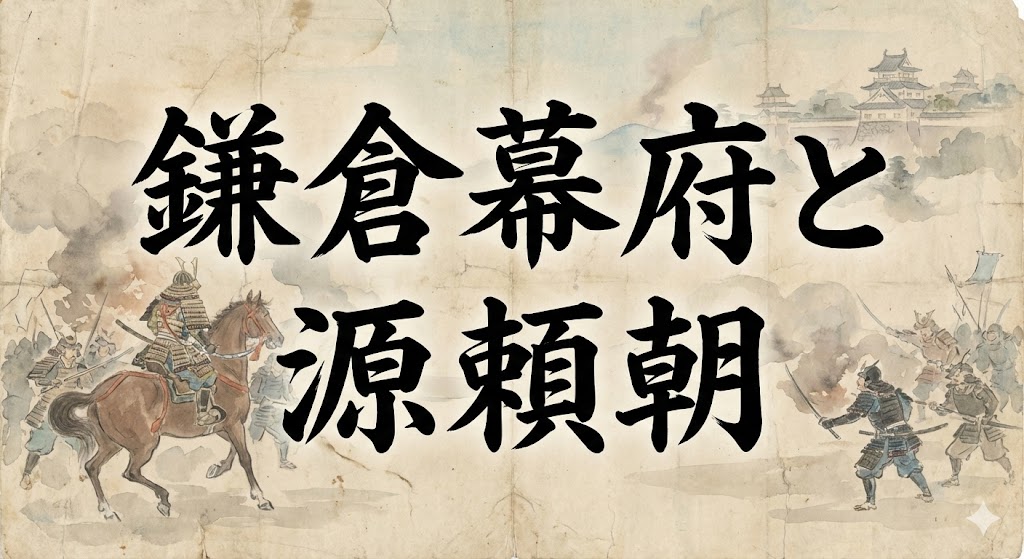
Following the sudden death of its leader, the Taira clan lost momentum and was annihilated by Minamoto no Yoritomo. Yoritomo established the Kamakura Bakufu, a revolutionary and independent samurai government. However, after Yoritomo’s death, a fierce power struggle erupted. Ultimately, the Hojo clan systematically eliminated rival vassals and even the shoguns themselves to seize absolute control of the nation.
Kiyomori’s sudden death dealt a fatal blow to the Taira clan. His successor lacked authority, causing the organization to collapse rapidly as they fled Kyoto. Meanwhile, Minamoto no Yoritomo (The calculating leader) solidified his political base in the eastern provinces and dispatched his brother to hunt down the retreating forces. Consequently, the Taira clan met a tragic end at the Battle of Dan-no-ura in 1185.
Furthermore, Yoritomo’s ultimate victory stemmed from his astute political maneuvering rather than mere military strength. Learning from the Taira’s failures, he ruthlessly eliminated his own brother, Yoshitsune, recognizing him as a potential threat. Therefore, Yoritomo prioritized strict organizational logic over personal emotions, building an unbreakable samurai network centered entirely around his own absolute authority.
🔍 Key Takeaways 🔍
The loss of supreme leadership immediately destroyed the Taira. Conversely, Yoritomo strengthened his regime through cold, calculated personnel management, proving that a lasting government requires a system built on absolute loyalty, not individual heroism.
The imperial court appointed Yoritomo as Seii Taishogun in 1192, allowing him to officially open his Bakufu in Kamakura. Surprisingly, he did not destroy the existing aristocratic court. Instead, he deployed Shugo and Jito nationwide alongside the traditional government. This brilliant strategy allowed the samurai to seize practical military and land management rights while ostensibly maintaining the old imperial order.
Consequently, this “dual government” structure successfully coexisted with Kyoto’s civil administration. Although inevitable conflicts arose between imperial governors and Kamakura stewards, the armed Bakufu gradually gained total dominance. Ultimately, Yoritomo evolved the Shogun’s role from a simple military commander into a permanent administrative ruler who strictly represented samurai interests.
🔍 Key Takeaways 🔍
Yoritomo mastered parasitic governance. By granting practical land management rights to his warriors, he secured unshakable loyalty and firmly established an independent samurai government without triggering a massive war with the imperial court.
Yoritomo’s death in 1199 immediately plunged the Bakufu into a severe leadership crisis. The young second shogun, Minamoto no Yoriie (The ineffective heir), failed to unify the powerful vassals. Consequently, when Yoriie began favoring his father-in-law, Hiki Yoshikazu, the Hojo clan rapidly retaliated. They ruthlessly massacred the Hiki family and assassinated Yoriie’s son to eliminate any competing influence.
Subsequently, Masako’s father confined and assassinated Yoriie himself, installing a puppet shogun in his place. Surprisingly, when her own father later attempted to monopolize power, Hojo Masako (The pragmatic matriarch) prioritized the Bakufu’s survival and exiled him. Thus, the Kamakura Bakufu completely transformed into a regime dominated by the shogun’s maternal relatives, rendering the actual shogun powerless.
🔍 Key Takeaways 🔍
Charismatic bloodlines rarely survive succession crises. The Hojo clan ruthlessly eliminated all threats, including their own flesh and blood, illustrating that absolute organizational logic always supersedes personal affection.

── Finally, let's recap with the summary and FAQ of this article.
The transition from the Taira clan’s fall to the Kamakura Bakufu’s rise, and the subsequent Hojo dominance, marks a vital shift from charismatic rule to pragmatic organizational governance. While Yoritomo successfully fused military and political power, the cold, calculating Hojo clan perfected his system. The main points of this article are:
‣ The dual government system practically stripped administrative power from the court.
‣ The Hojo clan ruthlessly usurped the shogun’s actual authority to ensure stability.
We hope these historical lessons offer valuable perspectives on power dynamics and organizational survival in your own professional life.
Q1. Why did the immensely powerful Taira clan fall so easily?
Kiyomori’s death paralyzed their leadership. Furthermore, Yoritomo strategically utilized rebel forces to corner them politically and militarily, culminating in their total destruction at Dan-no-ura.
Q2. What is the exact difference between Shugo and Jito?
Shugo functioned as provincial military and police commanders, while Jito strictly managed tax collection and local administration for specific estates. This allowed the Bakufu to control both security and economics.
Q3. Why did the Hojo clan assassinate the shogun’s children?
They sought to prevent the shoguns from forming political alliances with other powerful vassal families. The Hojo clan prioritized absolute control, willingly sacrificing their own relatives to eliminate future threats.


コメント欄