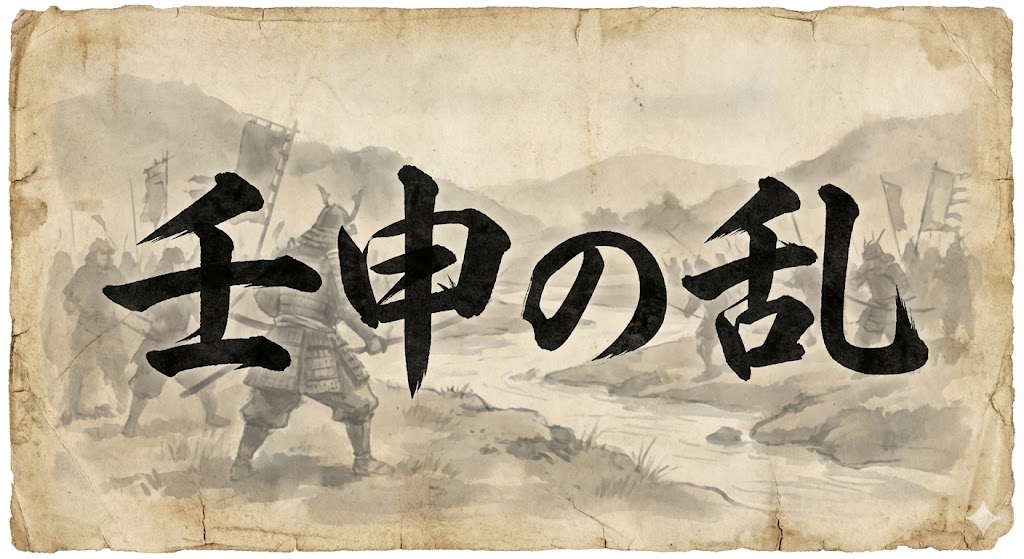
The Asuka period represents a century-long evolutionary process rather than a single revolutionary event. Initial centralization efforts began under the influential Soga clan. Subsequently, the massive Jinshin War violently accelerated this consolidation of power. Ultimately, Empress Jito finalized the ancient state framework by establishing a permanent capital, officializing the title of Emperor, and utilizing mythology to legitimize absolute imperial authority.
Traditional education often frames the Taika Reforms as an abrupt political awakening, unfairly casting the Soga-shi as mere villains. However, this simplistic narrative completely ignores the sophisticated legal and administrative systems developed during their dominance.
Surprisingly, modern historical research views this era as a continuous century of reform. The Soga administration initiated crucial centralizing policies long before the bloody 645 coup. Advanced frameworks like the Jushichijo Kenpo and official ranking systems perfectly demonstrate their pioneering state-building ambitions.
🌿 Key Takeaways 🌿
Historical evolution operates as a continuous line, not an isolated point. The Soga clan functioned as early reformists whose foundational political infrastructure directly enabled subsequent rulers to build the Japanese nation.

Political transitions rarely proceed smoothly. The death of Tenji Tenno (The centralizing monarch) in 672 instantly triggered the Jinshin no Ran. This brutal succession dispute divided the nation, pitting rival imperial heirs against each other in a fierce struggle for ultimate control.
Therefore, this bloody civil war ironically generated the ultimate momentum for centralization. Tenmu Tenno (The victorious autocrat) learned a harsh political lesson from this rebellion. He aggressively suppressed rival clans to forge an unchallengeable, top-down governance system, effectively eliminating future threats to the throne.
🌿 Key Takeaways 🌿
Civil wars paradoxically accelerate authoritarian centralization. The military victory provided the emperor with the undeniable power necessary to crush opposition and establish an absolute autocracy.

Jito Tenno (The visionary empress) fundamentally transformed the physical and ideological structure of Japan. Initially, she abandoned the ancient tradition of relocating palaces upon an emperor’s death. Instead, she constructed Fujiwara-kyo to permanently host the rapidly expanding, centralized government administration.
Furthermore, she systematically engineered the ideological legitimacy of the throne. Her administration formally adopted the title of Tenno and actively promoted the concept of Arahitogami. By commissioning official histories to trace the imperial bloodline directly to the gods, she successfully elevated the monarchy from mere political conquerors to absolute divine rulers.
🌿 Key Takeaways 🌿
Permanent infrastructure and engineered mythology solidify absolute power. Jito Tenno masterfully combined a fixed capital city with state-sponsored divine narratives to finalize the unshakeable foundation of the ancient state.

── Finally, let's recap with the summary and FAQ of this article.
The Asuka period represents a grand, century-long process of deliberate state-building rather than a series of isolated power struggles. The main points of this article are:
✅ The Jinshin War ironically accelerated the concentration of imperial power.
✅ Divine mythology and a permanent capital permanently secured political stability.
We hope analyzing this continuous evolution provides valuable perspectives on how infrastructure and ideology combine to forge a lasting national identity.
Q1. Why did the capital move so frequently before the Asuka period?
Rulers relocated palaces due to religious taboos regarding ritual pollution associated with death, as well as necessary political maneuvering to appease different regional clans.
Q2. Were the Soga really the villains who obstructed reform?
No, modern historians identify them as Japan’s earliest reformists. Their pioneering administrative policies heavily influenced and directly enabled the subsequent, famous Taika Reforms.
Q3. What can we learn from the history of this era?
We learn that profound historical and political changes rarely occur overnight; they develop through continuous, often violent processes spanning multiple generations and regimes.
コメント欄