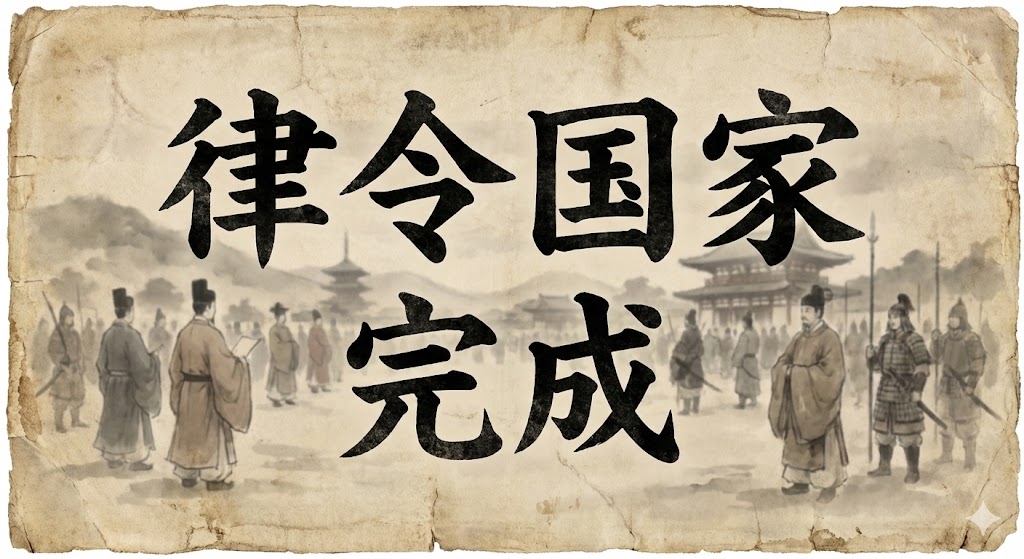
The 8th century definitively shaped the fundamental structure of the ancient Japanese state. Following decades of clan warfare and external tensions, Tenmu Tenno and Jito Tenno executed sweeping reforms to concentrate absolute power. Ultimately, their strategic establishment of new administrative posts, state-sponsored religious authority, and the comprehensive Ritsuryo system engineered a robust governance framework that survived for nearly a millennium.
The late 7th century plunged Japan into intense political turmoil, culminating in the devastating Jinshin no Ran. Therefore, preventing future successions disputes became the absolute priority for the victorious Tenmu Tenno (The victorious emperor) and his wife, Jito Tenno (The visionary empress). Consequently, they aggressively dismantled the existing clan-based power structures to engineer a system where the emperor exercised direct, unquestionable leadership.
Surprisingly, they achieved this by creating the supreme Daijo-daijin position above the traditional clan-dominated ministries, filling it strictly with loyal relatives. Furthermore, they strengthened the Nagon to directly transmit imperial orders and closely monitor the existing ministers. Ultimately, these strategic bureaucratic maneuvers successfully neutralized the powerful clans and rapidly centralized political authority.
🌿 Key Takeaways 🌿
Strategic bureaucratic restructuring neutralizes political rivals. By creating new, supreme executive positions exclusively for trusted insiders, the imperial family successfully bypassed traditional clan hierarchies and concentrated absolute decision-making power.

Political mechanics alone cannot truly command the hearts of the people. Therefore, establishing unshakeable religious legitimacy became essential. Tenmu Tenno officially declared himself an Arahitogami and elevated Ise Jingu, the sanctuary of the imperial ancestral gods, to the highest absolute rank. Furthermore, he strategically dispatched a Saio to visually cement the exclusive, sacred bond between the imperial family and the divine.
Additionally, the administration fundamentally altered its relationship with Buddhism. The state began directly managing religious institutions, perfectly exemplified by the construction of Daikandai-ji. Here, the government paid monks salaries in exchange for mandatory prayers protecting the state and the emperor. Consequently, by officially monopolizing both Shinto and Buddhist institutions, the throne achieved absolute spiritual supremacy.
🌿 Key Takeaways 🌿
State-controlled religion engineers unshakeable authority. By formally declaring divine status and institutionalizing both native and foreign faiths under government management, the emperors successfully branded themselves as absolute, sacred rulers.

The most enduring achievement of the Tenmu and Jito administrations was the comprehensive codification of state law. They successfully imported the Chinese-style Ritsuryo Seido. This revolutionary legal framework replaced the arbitrary, personal judgments of powerful clans with explicit, written regulations to objectively govern the nation.
Under this advanced system, the government definitively split into two primary branches: the Daijokan handling secular politics, and the Jingikan managing religious rituals. Eight specialized ministries operated under the Daijokan to systematically manage taxation and military affairs. Ultimately, this sophisticated administrative architecture functioned as the official operating system of the Japanese state for nearly a millennium.
🌿 Key Takeaways 🌿
Codified laws ensure long-term stability. The implementation of the Ritsuryo system successfully replaced chaotic clan rule with a highly organized, dual-branch bureaucracy that governed Japan for centuries.

── Finally, let's recap with the summary and FAQ of this article.
The 8th-century reforms constructed much more than a temporary government; they permanently defined the Japanese state. By implementing codified laws and centralizing authority, ancient rulers forged an enduring national identity. The main points of this article are:
✅ State-sponsored Shinto and Buddhism elevated the emperor to a living deity.
✅ The Ritsuryo system established a durable, sophisticated administrative framework.
We hope this exploration of ancient state-building offers valuable insights into how legal frameworks and ideological narratives consolidate political power.
Q1. When did the Ritsuryo system officially begin?
The system gradually developed from the late 7th century and fully materialized with the Taiho Ritsuryo in 701. Tenmu Tenno and Jito Tenno laid its most crucial foundations.
Q2. What is the difference between the Daijokan and the Jingikan?
The Daijokan managed all general political and administrative duties, while the Jingikan exclusively handled Shinto rituals. This dual structure distinctly separated secular governance from religious ceremonies.
Q3. Why did they rush these massive reforms?
The administration urgently needed to suppress internal clan conflicts and build a powerful, unified state capable of resisting the overwhelming geopolitical threat posed by the Tang empire.
コメント欄