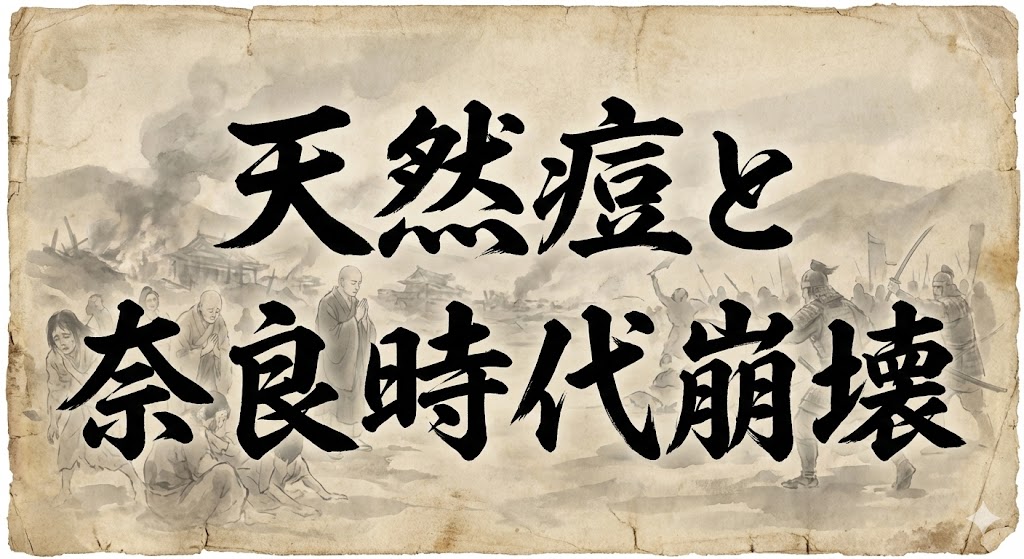
The Nara period’s glittering culture masks a brutal era defined by a lethal smallpox pandemic and relentless power struggles. The 735 epidemic annihilated approximately 30% of the population, completely devastating the Fujiwara leadership. Consequently, the desperate court embraced monumental Buddhist projects for spiritual protection. Ultimately, the scandalous rise of a monk and a massive Fujiwara counter-coup permanently shifted the imperial bloodline from the Tenmu to the Tenji lineage.
The devastating 735 Tenento pandemic radically altered Japanese political history. This relentless disease annihilated approximately one-third of the national population. Surprisingly, the virus also eradicated all four top-ranking brothers of the dominant Fujiwara clan, instantly creating a massive political vacuum at the center of the government.
Consequently, Tachibana no Moroe (The imperial minister) attempted to permanently marginalize the surviving Fujiwara members. This aggressive political exclusion provoked Fujiwara no Hirotsugu to launch a desperate rebellion, which the government swiftly crushed. Therefore, the terrified administration enlisted Gyoki to construct the colossal Great Buddha, utilizing monumental religious infrastructure to spiritually defend the crumbling nation.
🌿 Key Takeaways 🌿
Pandemics destroy political equilibrium. The sudden annihilation of the Fujiwara leadership triggered regional rebellions and forced the desperate state to rely heavily on massive Buddhist projects for national salvation.

Shomu Tenno bore the overwhelming psychological burden of plagues, rebellions, and factional warfare. Desperately seeking to sever this chain of disasters, he repeatedly relocated the capital city over several chaotic years. However, severe financial exhaustion ultimately forced the court to abandon these wandering capitals and return to Heijo-kyo.
Ultimately, the exhausted emperor abdicated the throne to his daughter. Subsequently, Komyo Kogo and her favored minister, Fujiwara no Nakamaro, aggressively seized control of the government. This ruthless duo successfully purged the rival Tachibana clan, officially returning the Fujiwara to absolute political dominance.
🌿 Key Takeaways 🌿
Geographic relocation cannot solve systemic crises. While the emperor fruitlessly moved the capital to escape disaster, the Fujiwara clan systematically utilized his abdication to reclaim absolute power.

The retired Koken Tenno developed a highly controversial relationship with Dokyo after he supposedly cured her severe illness through prayer. Terrified by the monk’s rapid political ascent, Nakamaro launched a preemptive rebellion but suffered a crushing defeat. Consequently, the victorious empress re-ascended as Shotoku Tenno and elevated Dokyo to unprecedented heights.
However, the true historical turning point occurred immediately after the empress’s death. Capitalizing on the sudden succession crisis, Fujiwara no Momokawa (The shadow broker) orchestrated a brilliant political coup. He forcibly installed a descendant of Tenji Tenno, permanently extinguishing the Tenmu imperial line and cementing a new era entirely controlled by the Fujiwara aristocracy.
🌿 Key Takeaways 🌿
Personal scandals trigger permanent political shifts. The controversial alliance between the empress and the monk inadvertently allowed the Fujiwara clan to orchestrate a massive coup, permanently changing the imperial bloodline.

── Finally, let's recap with the summary and FAQ of this article.
The devastating Tenento pandemic completely destabilized the Nara period, setting off a chain reaction of political purges and succession crises. The main points of this article are:
✅ Shomu Tenno desperately utilized massive Buddhist projects to save the state.
✅ A post-scandal coup permanently shifted the throne to the Tenji lineage.
We hope this exploration of ancient pandemics and political intrigue illustrates how unforeseen biological disasters can fundamentally reshape a nation’s history.
Q1. How severe was the Tenento epidemic?
It was catastrophically lethal, wiping out approximately 30% of Japan’s population, including all four leading brothers of the powerful Fujiwara clan, which completely paralyzed the central government.
Q2. Did Dokyo actually try to become the Emperor?
Historical records indicate there was a serious court debate regarding his ascension, but Shotoku Tenno ultimately rejected it. The exact truth remains deeply buried within the era’s intense political propaganda.
Q3. How did the Fujiwara clan regain their power?
Following the death of Shotoku Tenno, Fujiwara politicians capitalized on the lack of a clear heir to install a compliant emperor from the Tenji lineage, effectively eliminating their rivals and securing total court control.
コメント欄