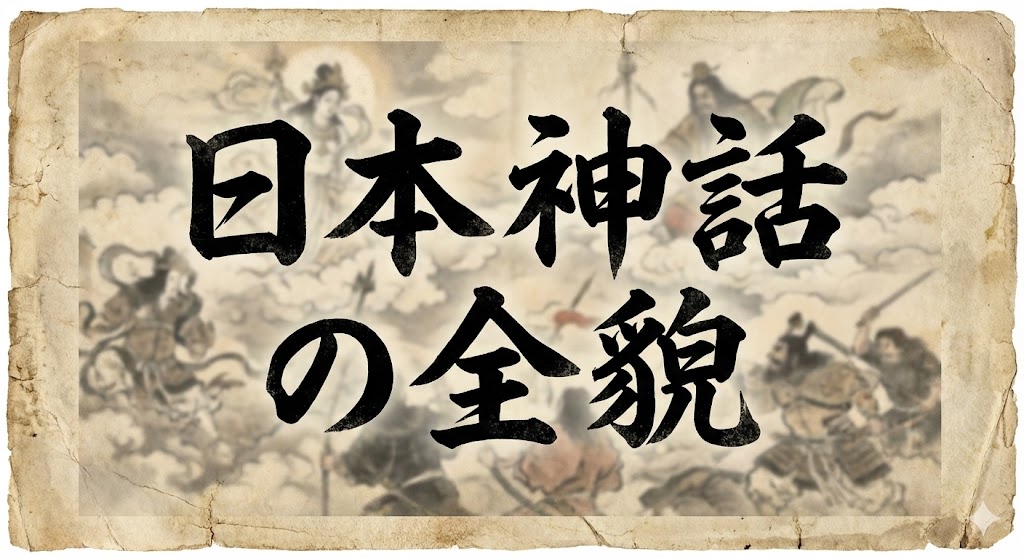
The mythological sibling rivalry between the sun goddess and her brother plunged the world into darkness. Subsequently, the exiled brother secured a sacred sword on earth. Ultimately, the heavenly gods reclaimed the terrestrial realm, culminating in the descent of the divine grandson and the establishment of the imperial lineage. These ancient narratives successfully legitimized the royal bloodline while reflecting actual historical migrations.
Susanoo (The exiled brother) visited Amaterasu (The sun goddess), sparking immediate suspicions of treason. Therefore, they performed Ukei to prove his innocence. Surprisingly, his subsequent victory triggered a destructive rampage across the heavenly fields, forcing the terrified sun goddess to seal herself inside the Ama-no-Iwato.
Consequently, this sudden disappearance plunged the entire world into catastrophic darkness and chaos. The desperate Yaoyorozu-no-Kami organized a lively banquet outside the cave. Their joyful laughter successfully lured Amaterasu out, instantly restoring light to the world. Ultimately, this severe disruption resulted in Susanoo’s permanent banishment to the earthly realm.
🌿 Key Takeaways 🌿
Reckless actions breed universal disaster. However, the collective wisdom and unity of the eight million gods successfully restored natural order, proving that resolving severe crises requires strategic collaboration rather than direct force.

The banished Susanoo descended to Ashihara-no-Nakatsukuni. Here, he heroically defeated the monstrous Yamata-no-Orochi and miraculously discovered the Kusanagi sword, which became one of the Sanshu-no-Jingi. Subsequently, his descendant, Okuninushi (The earthly ruler), successfully developed and governed the prospering terrestrial realm.
However, the heavenly deities soon demanded total control over the flourishing earth. They initiated the Kuni-yuzuri negotiations. When diplomatic talks stalled, the heavens deployed overwhelming military force to intimidate the earthly defenders. Consequently, Okuninushi surrendered his meticulously built kingdom entirely to Amaterasu’s divine lineage.
🌿 Key Takeaways 🌿
Heroic development invites superior conquest. The Kuni-yuzuri perfectly illustrates how incoming powerful factions systematically conquer and assimilate indigenous populations under the unassailable guise of divine right.

Following the earthly surrender, Amaterasu orchestrated the Tenson Korin. She dispatched her grandson, Ninigi-no-Mikoto (The heavenly heir), to Kyushu bearing the Sanshu-no-Jingi. Generations later, Emperor Jimmu (The first mortal ruler) launched the Jimmu Tosei, migrating eastward through fierce battles to establish his capital in Yamato.
This legendary accession in 660 BC forms the absolute foundation of Bansei Ikkei. While magic and monsters embellish these tales, historians argue that this eastward conquest accurately mirrors actual mass migrations and the political centralization of ancient Japan by continental immigrants and powerful regional clans.
🌿 Key Takeaways 🌿
Divine descent justifies mortal conquest. The legendary eastern expedition effectively encodes the historical reality of armed migrations and the violent unification of the Japanese archipelago under a single centralized authority.

── Finally, let's recap with the summary and FAQ of this article.
Ancient myths function as sophisticated political tools rather than mere fairytales. By decoding these narratives, we uncover the hidden power struggles and intentional state-building strategies of early Japan. The main points of this article are:
✅ The sacred treasures and divine bloodline permanently protected imperial legitimacy.
✅ The boundary between mythological narrative and historical migration is highly intertwined.
We hope these legendary accounts offer valuable perspectives on how ancient leaders utilized storytelling to forge a unified national identity.
Q1. Is Emperor Jimmu’s accession in 660 BC a historical fact?
Archaeological evidence places this era in the early Yayoi period, long before any unified state existed. Therefore, scholars universally consider 660 BC a highly symbolic, retroactively fabricated date.
Q2. Do the Sanshu-no-Jingi actually exist?
The physical artifacts supposedly exist within highly secure shrines. However, strict religious protocols forbid anyone, even the reigning Emperor, from directly viewing them.
Q3. Why is it necessary to study these ancient myths?
Understanding these narratives reveals the psychological foundation of the enduring imperial system. Furthermore, separating state-sponsored legend from archaeological fact cultivates vital critical thinking skills regarding national origins.
コメント欄