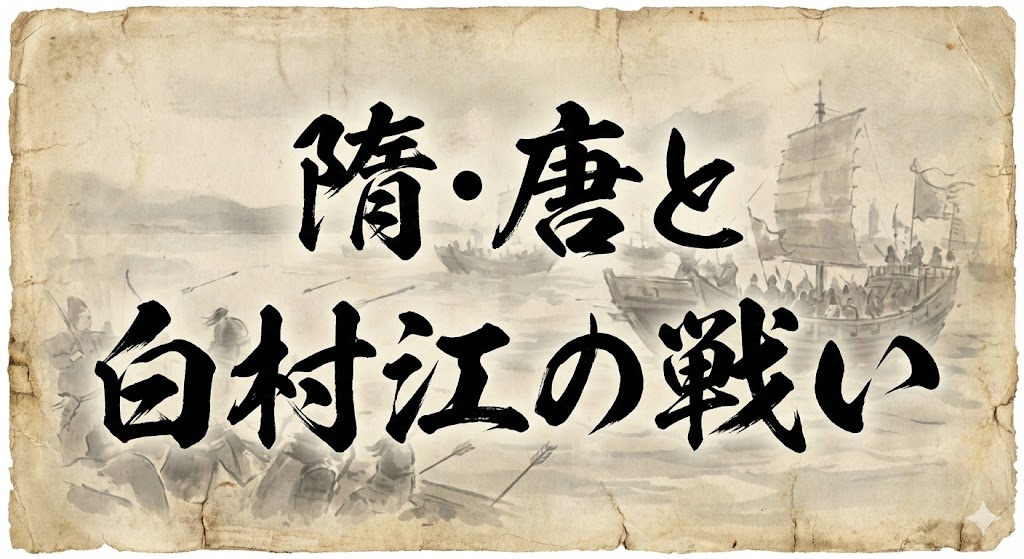
Historically, ancient Japan enjoyed geopolitical safety while the Chinese continent remained fractured. However, the sudden unification by the Sui and Tang empires birthed an overwhelming external threat. Ultimately, the devastating Tang-Silla military alliance and the looming fear of a direct invasion forced the fractured Japanese clans to rapidly build a powerful centralized state through the Taika Reforms.
Massive structural changes in Japanese history consistently require overwhelming external pressure. For example, the arrival of Western warships directly triggered the modernizing Meiji Ishin. The first monumental turning point occurred during the Taika Reforms in 645.
Previously, the deeply divided Sangokushi era in China provided four centuries of absolute military security. Therefore, the early Yamato Oken successfully developed without facing imminent continental threats. This geopolitical isolation temporarily shielded the nation from forced political evolution.
🌿 Key Takeaways 🌿
External pressure drives domestic evolution. The long period of Chinese fragmentation allowed early Japan to grow peacefully, proving that geopolitical isolation delays the urgent need for a strongly centralized government.

The East Asian power balance completely shattered in 581. Yo Ken (The ambitious general) established the Zui dynasty and rapidly unified the vast Chinese continent. Consequently, his son, Yo Dai (The aggressive successor), ruthlessly expanded the empire’s borders through massive military campaigns.
While the Zui collapsed quickly due to overextension, the subsequent To empire efficiently inherited its systems. The To dynasty built a highly sophisticated, enduring golden age that dominated Asia. Surprisingly, this sudden emergence of a unified superpower completely terrified the Japanese ruling clans, rendering their internal power struggles obsolete.
🌿 Key Takeaways 🌿
Fragmented neighbors ensure safety; unified empires project danger. The rapid succession of the Zui and To empires instantly transformed the Asian continent from a safe buffer zone into an overwhelming military threat.

The powerful To empire strategically allied with the rising Shiragi kingdom. Therefore, this overwhelming military coalition cornered Kudara, Japan’s traditional continental ally. The potential destruction of Kudara signaled an imminent, direct invasion of the unprotected Japanese archipelago.
Ultimately, the catastrophic Japanese defeat at the Hakusukinoe no Tatakai in 663 perfectly validated these fears. Consequently, this intense national terror directly sparked the Taika Reforms. This survival project violently forced the fractured clans to abandon their autonomy and build a powerful centralized state under supreme imperial rule.
🌿 Key Takeaways 🌿
National survival demands unified leadership. The catastrophic defeat at sea and the destruction of a vital ally forced Japan to instantly engineer a highly centralized, military-ready government.

── Finally, let's recap with the summary and FAQ of this article.
The Taika Reforms functioned as a desperate national survival project rather than a mere internal power grab. Reacting to the shifting East Asian dynamics saved the ancient nation. The main points of this article are:
✅ The Tang-Silla alliance threatened Japan’s crucial buffer zone, Kudara.
✅ Overwhelming external terror directly catalyzed the centralizing Taika Reforms.
We hope these historical dynamics illustrate how intense geopolitical pressure accelerates state modernization and unifies fractured governments.
Q1. Why did the Zui dynasty collapse so quickly?
Yo Dai’s brutal forced labor projects, such as the Grand Canal, combined with repeated disastrous military campaigns against northern kingdoms, quickly ignited massive, uncontrollable peasant rebellions.
Q2. What was the difference between Zui and To?
While Zui operated as a short-lived, heavy-handed dictatorship, To efficiently inherited its systems and utilized highly sophisticated diplomacy to build a long-lasting, stable golden age.
Q3. Why did Japan risk a massive war to support Kudara?
Kudara served as a vital pipeline for advanced continental technology and a crucial geopolitical buffer zone protecting the Japanese home islands from direct To and Shiragi invasions.
コメント欄