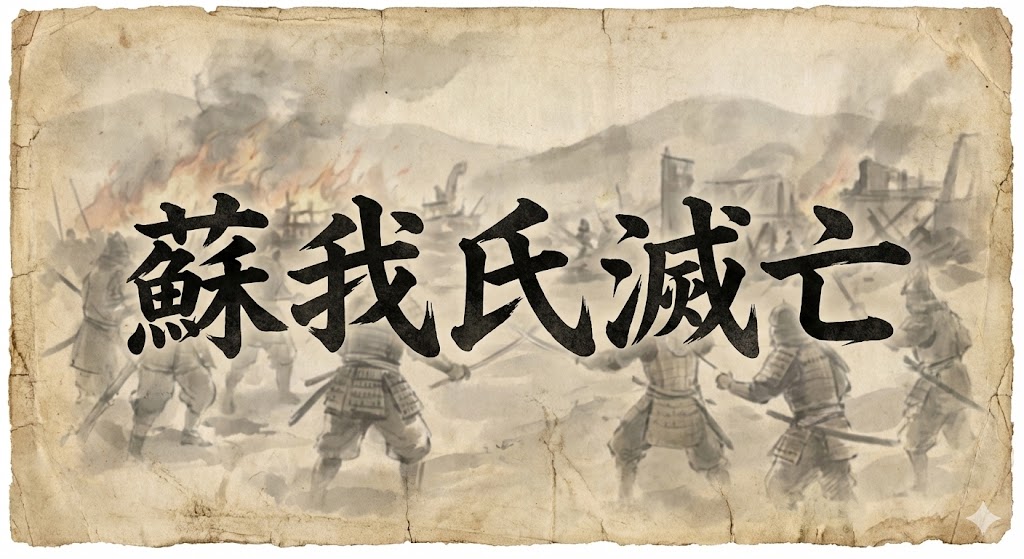
The terrifying emergence of the Tang empire forced ancient Japan to rapidly modernize. However, the dictatorial Soga clan severely obstructed this necessary evolution. Consequently, an ambitious imperial prince executed a shocking, bloody coup during a diplomatic ceremony. Ultimately, this successful assassination catalyzed the Taika Reforms, transforming Japan into a powerful centralized state under supreme imperial control.
The sudden unification of the continent by the To Ocho severely shocked the Japanese ruling class. Their overwhelming military might and highly advanced culture presented a terrifying existential threat. Therefore, ancient Japan desperately needed a strong, unified government to survive this shifting international landscape.
However, a massive domestic obstacle blocked this crucial evolution. Soga no Iruka (The dictatorial leader) and the Soga-shi commanded absolute political control, thoroughly overshadowing the imperial family. Ultimately, this intense combination of foreign pressure and domestic tyranny fueled a desperate, immediate demand for Chuo Shuken-ka.
🌿 Key Takeaways 🌿
A dual crisis necessitates radical action. The terrifying external threat of the Tang empire, combined with the suffocating internal monopoly of the Soga clan, forced the imperial faction to seek a dramatic political reset.

A meticulously planned assassination, rather than a conventional war, abruptly ended the Soga clan’s dominance. In 645, Naka no Oe no Oji (The ambitious prince) and Nakatomi no Kamatari (The brilliant strategist) chose a highly formal diplomatic reception for Korean envoys to execute their deadly plot.
Surprisingly, extreme tension nearly ruined the operation. The designated assassins hesitated, forcing the prince himself to strike the first blow against Iruka in front of the horrified court. This shocking, violent Isshi no Hen instantly annihilated the Soga main family, immediately returning supreme political authority to the imperial bloodline.
🌿 Key Takeaways 🌿
Public executions project absolute authority. Orchestrating the assassination during a highly visible state ceremony not only eliminated the dictator but also undeniably demonstrated the restored power of the imperial family.

The bloody coup simply cleared the stage for a monumental state-building project under Kotoku Tenno (The reformist emperor). In 646, the administration issued the Kaishin no Mikotonori. This revolutionary edict permanently abolished private land ownership, officially establishing a system where the emperor directly controlled all land and citizens.
Consequently, the government implemented nationwide household registries to systematically collect taxes. Furthermore, the adoption of “Taika” as Japan’s first Gengo clearly signaled the emperor’s absolute authority over time itself. Ultimately, the Taika no Kaishin successfully transformed Japan from a loose coalition of warlords into a legally governed, modern state.
🌿 Key Takeaways 🌿
True reform requires systemic change. The assassination merely removed the obstacle; the subsequent implementation of strict legal codes, taxation, and land nationalization genuinely built the foundation of the modern Japanese state.

── Finally, let's recap with the summary and FAQ of this article.
The intense combination of foreign pressure and domestic tyranny forced ancient Japan to evolve. By violently removing the Soga clan, the imperial faction secured the power necessary to execute sweeping national reforms. The main points of this article are:
✅ A dramatic assassination successfully destroyed the dictatorial Soga clan.
✅ The Taika Reforms systematically established absolute imperial authority and legal rule.
We hope this dramatic historical turning point illustrates how extreme crises often catalyze essential administrative and political modernization.
Q1. Why did they assassinate Soga no Iruka during a public ceremony?
Executing the dictator publicly during a major state event ensured his immediate death while simultaneously demonstrating the unchallengeable, restored authority of the imperial family to all attending elites.
Q2. What is the exact difference between Isshi no Hen and Taika no Kaishin?
“Isshi no Hen” strictly refers to the violent 645 coup d’état itself. Conversely, “Taika no Kaishin” encompasses the entire decades-long process of political and legal restructuring that followed the assassination.
Q3. What was the significance of adopting the first Gengo, “Taika”?
Meaning “Great Reformation,” it explicitly signaled Japan’s adoption of Chinese imperial standards. By naming the era, the emperor boldly asserted his ultimate, divine authority over the flow of time within his realm.
コメント欄