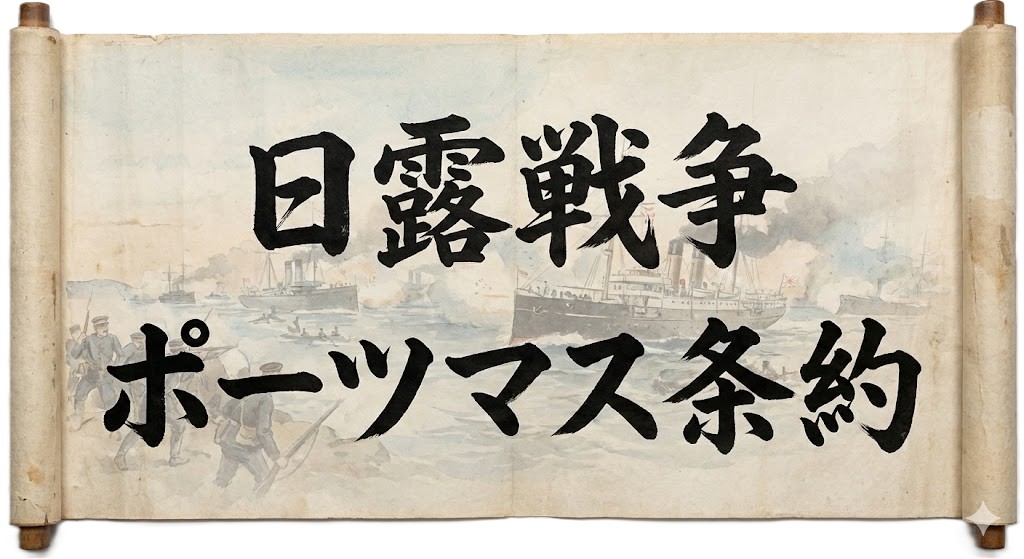
During the Russo-Japanese War, Japan gained the upper hand through a surprise attack on Port Arthur and a dramatic victory at the Battle of Tsushima. However, in the land war, the Japanese army was forced into a grueling war of attrition, suffering massive casualties against Russia’s skillful retreat tactics and formidable fortresses. Consequently, following the first Russian Revolution and the annihilation of the Baltic Fleet, the Treaty of Portsmouth was signed. Although Japan acquired Manchurian interests and southern Sakhalin, the total lack of financial reparations ignited the violent Hibiya Incendiary Incident domestically. Furthermore, the military dangerously distorted this narrow victory into an obsession with “spiritualism,” ultimately driving the nation down a catastrophic path toward the Siberian Intervention and the Pacific War.
At the time, the Russian Far East Fleet hiding within the Ryojun Yosai (Port Arthur fortress) posed the greatest threat to Japan. To neutralize them, the Japanese army launched a massive siege. However, the Third Army, led by Nogi Maresuke, obsessively relied on frontal assaults. Consequently, they fell into a horrific war of attrition, becoming easy prey for Russian machine guns and suffering staggering casualties. Therefore, this gruesome spectacle brutally demonstrated to the world the extreme difficulty of capturing modern concrete fortresses.
The intervention of Nogi’s close friend, Kodama Gentaro, finally broke this devastating deadlock. He immediately halted the reckless charges and shifted the primary objective to capturing the strategic 203 Meter Hill. From this vantage point, artillery fire finally neutralized the Russian fleet. However, including the subsequent Battle of Mukden, it is more accurate to say the Japanese ground forces merely “endured” rather than conclusively “won.” Surprisingly, Japan’s victory was not overwhelming; it was an incredibly fragile success achieved by pushing the nation’s absolute limits.
🟢 Key Takeaways 🟢
The Japanese army suffered catastrophic casualties due to outdated frontal assault tactics against heavily fortified Russian positions. Although strategic course corrections ultimately secured the fortress, the land war was a desperately narrow survival rather than a dominant military triumph.
In stark contrast to the exhausting land war, a dramatic victory awaited on the seas. At the Nihonkai Kaisen, the Combined Fleet led by Togo Heihachiro utterly annihilated the Russian Baltic Fleet, which had sailed halfway across the globe. Furthermore, coinciding with domestic revolutionary turmoil within Russia, the Tsar was finally forced to abandon the war effort. Consequently, Japan’s absolute mastery of the seas combined with Russia’s internal collapse served as the decisive blow that opened the path to peace negotiations.
Through the mediation of US President Theodore Roosevelt, the Portsmouth Joyaku was signed. While Japan successfully acquired Manchurian interests and southern Sakhalin, the “financial reparations” that the public desperately expected were absolutely zero. Enraged by this result after enduring crushing taxes and immense human sacrifices, the Japanese populace erupted into violent riots, culminating in the Hibiya Yakiuchi Jiken. Therefore, this diplomatic victory ironically generated fierce domestic division and explosive resentment against the government.
🟢 Key Takeaways 🟢
The absolute naval victory at Tsushima and Russia’s domestic collapse forced an end to the war. However, the peace treaty’s failure to secure financial compensation completely betrayed the exhausted Japanese public, igniting massive, violent anti-government riots in Tokyo.
The Russo-Japanese War dangerously implanted a false sense of confidence within the Japanese military. They heavily embraced Seishin-shugi, the irrational belief that “Yamato-damashii” (Japanese spirit) and bayonet charges could effortlessly overcome material inferiority. Consequently, this deadly overconfidence heavily contributed to the disastrous Siberia Shuppei and later drove the nation into World War II while blatantly neglecting technological innovation. Therefore, the failure to objectively analyze the true factors behind their narrow victory steered the military organization toward ultimate ruin.
Meanwhile, during World War I, Japan opportunistically utilized the Anglo-Japanese Alliance to seize German territories like the Nanyo Shoto and Qingdao in China. Furthermore, while Europe burned in conflict, Japan thrived economically as a massive wartime supplier, temporarily solidifying its status as a “first-rate” global power. Surprisingly, this period highlighted Japan’s shrewd diplomatic agility, actively exploiting international chaos to maximize practical gains with minimal military sacrifice.
🟢 Key Takeaways 🟢
The Russo-Japanese War infected the military with a toxic reliance on “spiritualism,” leading to catastrophic future blunders. Conversely, Japan’s highly opportunistic diplomacy during WWI successfully expanded its empire and economic might, creating a dangerous mix of unearned confidence and actual national growth.
── Finally, let's recap with the summary and FAQ of this article.
The Russo-Japanese War was a monumental event establishing Japan as a global great power. However, this victory was incredibly fragile and left a dark, long-lasting legacy of toxic spiritualism. The main points of this article are:
‣ The decisive naval victory at Tsushima and the resulting domestic riots.
‣ The dangerous birth of military spiritualism and WWI opportunism.
We hope understanding this fragile success helps you recognize how misinterpreting past victories can rigidly blind organizations and lead them toward catastrophic future failures.
Q1. Why was a small nation like Japan able to defeat the massive Russian Empire?
A major factor was the outbreak of the 1905 Russian Revolution, which severely crippled their ability to continue the war. Additionally, the complete annihilation of the Baltic Fleet at the Battle of Tsushima served as the definitive military blow that forced Russia to the negotiating table.
Q2. What exactly did Japan gain and lose from this war?
Japan gained crucial Manchurian railway rights, southern Sakhalin, and absolute dominance over Korea, officially joining the ranks of global powers. However, they lost immense numbers of soldiers and drained their national treasury. The total lack of financial reparations deeply angered the heavily taxed populace.
Q3. How did this war negatively impact Japan’s future?
It deeply entrenched the false narrative that “spiritual willpower” could overcome material and technological inferiority. This highly irrational mindset poisoned military doctrine, directly contributing to catastrophic strategic failures during the Siberian Intervention and World War II.
コメント欄