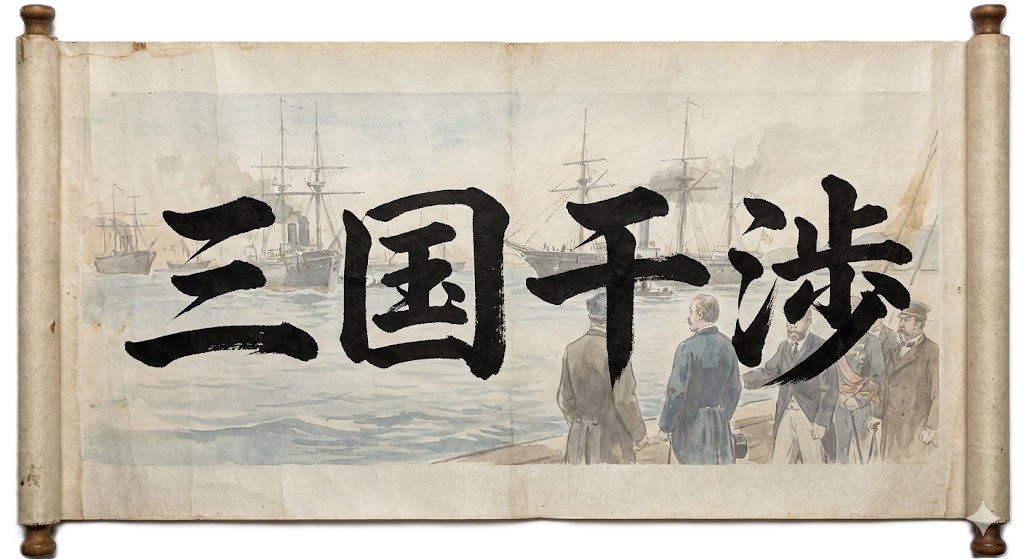
Defying all global expectations, Japan secured a crushing victory in the Sino-Japanese War, claiming Taiwan and the Liaodong Peninsula. However, the subsequent Triple Intervention orchestrated by Russia forcefully stripped Japan of Liaodong. Consequently, this profound national humiliation ignited explosive anti-Russian sentiment. Furthermore, driven by a paranoid geopolitical logic that securing colonies required endlessly expanding the northern defense perimeter, Japan’s collision with Russia became inevitable. Ultimately, emboldened by the historic Anglo-Japanese Alliance, Japan aggressively initiated a devastating total war against the Russian Empire.
Globally, very few military observers anticipated a Japanese victory against the massive Qing Empire. Specifically, the Qing’s Beiyang Fleet, possessing heavily armored behemoths like the Zhenyuan, drastically outgunned the Japanese navy on paper. Surprisingly, Japan secured a staggering series of absolute victories across land and sea, rapidly advancing through the Korean Peninsula into Manchuria and capturing Taiwan, utterly shocking the Western world.
However, Japan’s inaugural colonial administration proved incredibly brutal. Under the ideological banner of Kominka, the government forcefully suppressed indigenous cultures in Taiwan and Korea, ruthlessly crushing any local resistance with overwhelming military force. Consequently, this intoxicating military success permanently embedded a dark, oppressive framework of “rule by force” into Japan’s overarching imperial strategy.
🟢 Key Takeaways 🟢
Defeating the seemingly invincible Qing military drastically elevated Japan’s international status, but it simultaneously launched an era of harsh colonial domination. This triumphant military experience dangerously validated aggressive diplomacy and the brutal suppression of conquered populations.
The sweet taste of victory instantly turned into bitter humiliation. Orchestrating the Triple Intervention, Russia, Germany, and France forcefully demanded Japan return the Liaodong Peninsula. While officially justified as preserving “peace in China,” Russia’s true intention was simply to seize the strategic territory for itself. Completely lacking the military power to fight three global empires simultaneously, Japan agonizingly submitted to this extortion.
Although Japan received massive silver Reparations in exchange, public fury remained unquenchable. Furthermore, when Russia shamelessly leased the very peninsula it had forced Japan to return, national outrage reached a boiling point. Therefore, adopting the grim slogan “Gashin Shotan” (enduring unspeakable hardships for revenge), the entire nation feverishly united, dramatically shifting its trajectory toward an inevitable, catastrophic war against Russia.
🟢 Key Takeaways 🟢
The Triple Intervention brutally demonstrated that military victories meant nothing without the power to resist Western diplomatic extortion. Consequently, the enraged Japanese public willingly endured severe economic sacrifices to aggressively expand the military for a future war of vengeance.
Japan fell into a dangerous, endless loop of expansionist logic: “To protect the homeland, we must control Korea; to protect Korea, we must control Manchuria.” Meanwhile, exploiting the Boxer Rebellion, Russia permanently stationed troops in Manchuria and aggressively constructed fortresses near the Yalu River on the Korean border. As diplomatic negotiations completely collapsed, Japan’s existential terror regarding Russian southern expansion reached its absolute limit.
Crucially, the historic Anglo-Japanese Alliance fundamentally altered the global power dynamic. This military pact guaranteed that if any third nation (like France) assisted Russia, the almighty British Empire would actively join Japan. Consequently, ensuring a strictly one-on-one battlefield, the Japanese government decisively terminated negotiations. Therefore, in February 1904, calculating that a preemptive strike was their only chance for survival, Japan officially initiated a desperate war against the Russian Empire.
🟢 Key Takeaways 🟢
Russia’s aggressive encroachment upon Korea posed an unacceptable threat to Japanese sovereignty. By securing an alliance with the British superpower to isolate Russia, Japan confidently finalized its decision to launch a preemptive war to protect its imperial defense lines.
── Finally, let's recap with the summary and FAQ of this article.
The Sino-Japanese War birthed both supreme national confidence and deeply traumatizing humiliation. Ultimately, the terror of Russian expansion forced Japan into a reckless cycle of perpetual military escalation. The main points of this article are:
‣ The Triple Intervention sparking explosive, nationwide anti-Russian vengeance.
‣ The Anglo-Japanese Alliance actively enabling the declaration of war.
We hope understanding this paranoid geopolitical logic clarifies why Japan felt entirely compelled to fight a seemingly suicidal war against a global superpower.
Q1. Why did a small nation like Japan manage to defeat the massive Qing Empire?
Although the Qing military possessed overwhelming sheer numbers, it severely lacked modern organizational cohesion and suffered from rampant internal corruption. Conversely, Japan’s highly centralized command structure and rapid, modernized logistical networks secured the decisive victory.
Q2. What was the true motive behind the Triple Intervention?
While Russia officially claimed they were protecting “peace in the Far East,” their actual geopolitical motive was securing the ice-free ports of the Liaodong Peninsula for their own naval expansion. Proving their hypocrisy, they brazenly occupied the territory shortly after forcing Japan out.
Q3. How did the Anglo-Japanese Alliance directly influence the start of the war?
The alliance served as an ultimate deterrent against French intervention. Knowing that France would not risk a global war with the British Empire, Japan confidently calculated they could defeat an isolated Russia in a localized, one-on-one conflict.
コメント欄