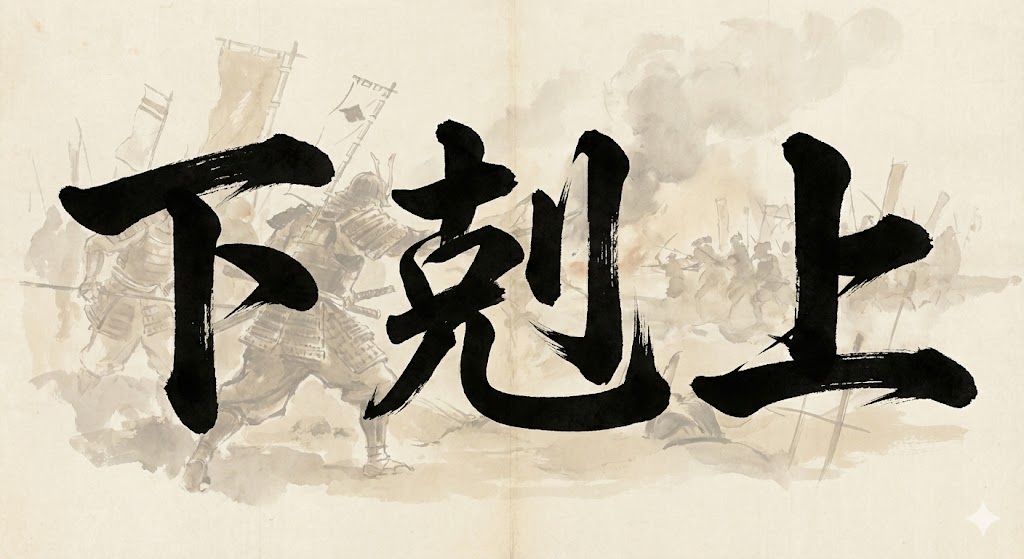
The once-powerful Shugo Daimyo, such as the Yamana and Hosokawa clans, collapsed due to internal conflicts and the rise of armed local factions known as Kokujin. The Yamana lost control of six provinces to grassroots uprisings, deteriorating into minor regional lords. Conversely, Hosokawa Masamoto orchestrated a shocking military coup in 1493, replacing the Shogun and seizing actual control of the Bakufu. Consequently, these symbolic events decisively shattered Shogunal authority and officially heralded the ruthless Sengoku period.
For culturally inclined Daimyo like Yamana Masatoyo (The refined lord), practical local governance proved extremely troublesome. Specifically, the Kokujin posed the greatest threat. As descendants of Kamakura-era Jito, these warriors possessed deep local roots and highly independent networks. Furthermore, many Kokujin originally served as direct Gokenin, actively monitoring the Shugo’s power on behalf of the Shogun.
Therefore, they fiercely resisted subservience during the Muromachi period. Although Shugo attempted to appease them with tax concessions, their fierce independence remained intact. Once the Shogunate’s central authority wavered, these local factions immediately bared their fangs. They actively formed independent alliances and launched open rebellions against their appointed governors.
🔍 Key Takeaways 🔍
Local strongmen prioritized their own territorial interests and alliances over orders from centrally appointed governors. This widespread grassroots disobedience completely paralyzed the traditional top-down administrative system.
In 1387, Shinano Province witnessed a prime example of local resistance against the Shiba clan. The locals formed a Kokujin Ikki, physically blocking the Shugo’s entry and ultimately forcing the Shogun to suspend the governor’s authority. Consequently, this identical administrative nightmare soon struck the prestigious Yamana clan. Controlling massive, scattered territories proved physically impossible.
Frequent Kokujin uprisings systematically stripped Yamana Masatoyo of six provinces, leaving only Tajima and Inaba under his direct command. Furthermore, following Masatoyo’s death, internal succession disputes fractured these remaining territories. Ultimately, this catastrophic loss of territorial control reduced the once-mighty Yamana conglomerate into an insignificant local faction fighting for mere survival.
🔍 Key Takeaways 🔍
Expanding beyond administrative capacity guarantees organizational collapse. Relentless grassroots rebellions and bitter internal family disputes successfully dismantled one of Japan’s most powerful military families.
Conversely, the Yamana’s primary rivals, the Hosokawa, experienced a different trajectory. Previously, heroes like Hosokawa Yoriyuki governed legitimately as the Shogun’s supreme deputy (Kanrei). However, following the Onin War, the power dynamics drastically shifted. Hosokawa Masamoto emerged as a far more ruthless and pragmatic operator than his loyal predecessors.
In 1493, Masamoto executed an unprecedented military coup known as the Meio no Seihen. He marched his army into Kyoto, exiled Shogun Ashikaga Yoshiki, and installed a compliant puppet, Ashikaga Yoshizumi. Therefore, this blatant usurpation of the highest authority completely shattered the Bakufu’s prestige. It officially legalized pure meritocracy, proving that absolute military might now dictated Japanese politics.
🔍 Key Takeaways 🔍
The Shogun’s supreme deputy publicly overthrew his own master to install a puppet. This shocking coup shattered the ultimate political taboo, permanently destroying central authority and igniting the Sengoku period.

── Finally, let's recap with the summary and FAQ of this article.
During the late Muromachi period, powerful Shugo Daimyo lost their authority to relentless upward pressure. In the provinces, Kokujin successfully asserted their independence and expelled traditional governors. Simultaneously, Hosokawa Masamoto completely annihilated the Shogun’s authority in the capital. The main points of this article are:
‣ The Yamana clan collapsed due to rebellions and infighting.
‣ The Hosokawa coup turned the Shogun into a mere puppet.
We hope these historical lessons offer valuable perspectives for navigating your own complex professional and personal environments.
Q1. What ultimately happened to the Yamana clan?
They barely survived as minor lords of Tajima and Inaba until they clashed with Oda Nobunaga in 1580. Although they lost their domains, branches of the family survived and maintained their name until the end of the feudal era.
Q2. What was the core difference between the Hosokawa and Yamana clans?
While both possessed prestigious Genji bloodlines, the Hosokawa were a direct branch family of the Ashikaga Shoguns. This close blood tie allowed them to frequently hold the powerful Kanrei position and dominate central politics.
Q3. Why is this specific era important to study?
It showcases the raw dynamism of a society transitioning from rigid authority to pure meritocracy. The complete collapse of traditional hierarchies offers profound lessons regarding modern organizational theory and crisis leadership.



コメント欄