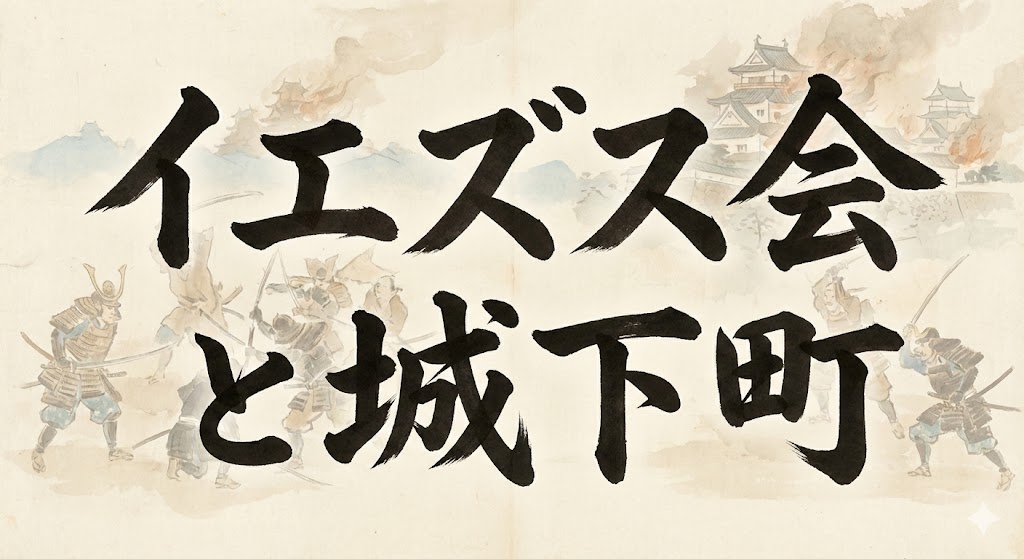
The Nanban trade based in Macau brought both immense wealth and Christianity to Japan. Sengoku Daimyo like Omura Sumitada pragmatically converted to secure lucrative trade profits, exhibiting such zeal that they ruthlessly destroyed local temples. Simultaneously, explosive economic growth forced Daimyo to abandon defensible mountain castles for flatland Jokamachi, birthing massive modern cities like Edo and Sendai. Ultimately, the wealth concentrated in these urban hubs fostered profound Zen-inspired arts inherited from Ashikaga Yoshimasa’s Higashiyama culture.
During the Sengoku era, direct Chinese trade generated massive wealth but carried significant conflict risks. Consequently, ambitious Daimyo targeted Portuguese merchants operating from Macau. However, these foreign wealth bringers invariably arrived accompanied by Jesuit missionaries preaching the Christian gospel.
Because these missionaries heavily influenced the destination of merchant ships, many Daimyo pragmatically converted to Christianity to secure exclusive port visits. For instance, Omura Sumitada (The zealous convert) donated Nagasaki and aggressively destroyed local shrines to appease the Jesuits. Ultimately, this inseparable fusion of religious faith and extreme economic profit catalyzed the explosive, radical expansion of Christianity across western Japan.
🔍 Key Takeaways 🔍
Daimyo protected and adopted Christianity not purely out of spiritual devotion, but as a mandatory ticket to secure massive economic profits from Portuguese trading ships. This pragmatic “win-win” relationship fundamentally altered the regional religious and social structures.
Traditionally, warriors resided in highly defensible, remote mountain castles. However, rapid commercialization rendered these isolated fortresses economically obsolete. To effectively manage growing wealth, Daimyo relocated to plains and critical transport hubs, constructing massive Jokamachi that combined military strongholds with bustling markets. By forcibly concentrating merchants, they engineered a highly efficient system to extract regional wealth.
This nationwide urbanization wave birthed the prototypes for modern Japanese metropolises. Examples include the massive capital of Edo, built by Tokugawa Ieyasu (The visionary unifier), and the northern commercial hub of Sendai, designed by Date Masamune (The northern hegemon). Therefore, this strategic prioritization of economic centralization over defensive geography permanently transformed Japanese urban demographics, turning castles into massive economic engines.
🔍 Key Takeaways 🔍
Sengoku Daimyo were forced to prioritize “earning” over “defending.” Abandoning inconvenient mountain forts to build integrated urban centers on the plains successfully concentrated both population and wealth, laying the direct foundation for modern Japanese city structures.
Urban wealth concentration inevitably birthed leisure. Wealthy elites craved entertainment and actively sponsored artists, modeling their tastes after Kyoto’s cultural standards. Ironically, Ashikaga Yoshimasa (The cultural patron), a catastrophic political failure, served as the ultimate aesthetic role model. His profound “wabi-sabi” worldview permeated provincial warrior societies, establishing entirely new cultural values.
Deeply influenced by Zen Buddhism, Yoshimasa favored profound spiritual simplicity over gaudy extravagance, birthing Shoin-zukuri architecture and monochrome Suibokuga. For warriors facing constant death, these Zen teachings and refined arts provided crucial psychological salvation. Ultimately, this Zen-inspired artistic refinement functioned simultaneously as spiritual healing and a supreme display of high social status.
🔍 Key Takeaways 🔍
Art flourishes where wealth and leisure intersect. Ironically, the most violent and bloody era in Japanese history fostered the deepest, most tranquil traditional culture, heavily financed by the newly enriched urban warlords and merchants.

── Finally, let's recap with the summary and FAQ of this article.
The Sengoku period functioned not merely as an era of destruction, but as a crucial incubator for the subsequent peaceful age. The accumulation of Nanban trade wealth, the efficient urbanization of Jokamachi, and elite cultural patronage fundamentally transformed society. The main points of this article are:
‣ Economic efficiency drove the shift from mountain forts to Jokamachi.
‣ Urban wealth sponsored profound Zen-inspired Higashiyama culture.
We hope these historical lessons offer valuable perspectives for navigating your own complex professional and personal environments.
Q1. Why did Christianity spread so rapidly?
Because Daimyo aggressively protected the missionaries to secure immense trade profits. The Jesuits always accompanied Portuguese merchants, making religious conversion a practical prerequisite for participating in lucrative international commerce.
Q2. Why did sophisticated culture develop during such a violent war?
Because urbanization concentrated immense wealth and leisure. Newly enriched Daimyo and merchants acted as wealthy patrons, sponsoring artists who inherited the refined, Zen-inspired aesthetics established by Ashikaga Yoshimasa.
Q3. How should we view this specific era of change?
It was a period of simultaneous destruction and creation. While old medieval authorities collapsed, the foundational structures for early-modern Japan—such as centralized urban economies and traditional aesthetic values—were permanently established.




コメント欄