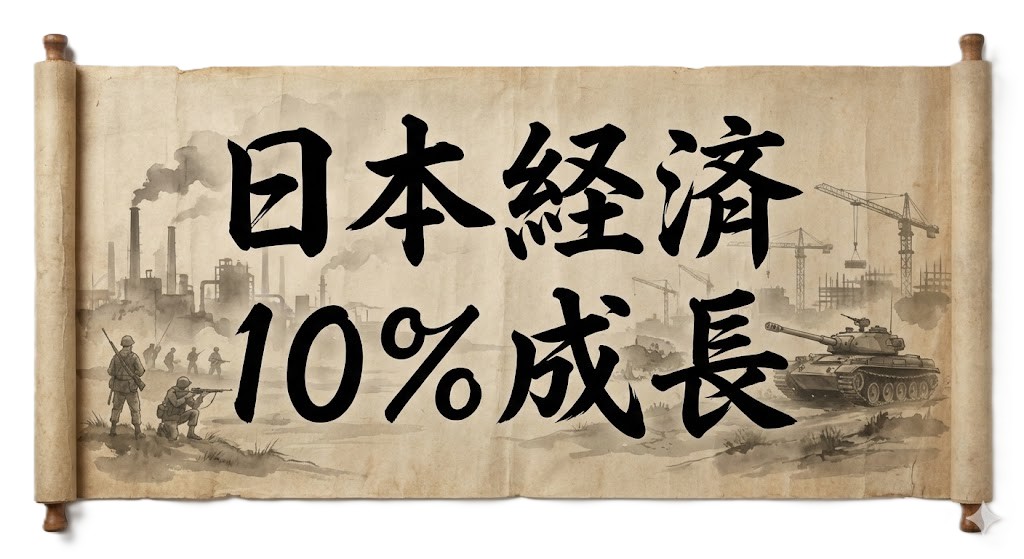
Following the chaotic 1960 protests, Prime Minister Ikeda Hayato stabilized the nation by preaching “Tolerance and Patience,” masterfully unifying his fractured party. Consequently, his ambitious “Income Doubling Plan” ignited an unprecedented economic boom, achieving an astonishing annual growth rate exceeding 11%. Ultimately, this “Japanese Miracle” was engineered by a powerful alliance between elite government bureaucrats directing industrial strategy and fiercely loyal corporate conglomerates known as Keiretsu.
In the early 1960s, the ruling Liberal Democratic Party teetered on the absolute brink of self-destruction. Kishi Nobusuke’s dictatorial tenure had violently fractured the conservative coalition. However, his successor, Ikeda Hayato, decisively abandoned authoritarianism for Tonai Yuwa. Instead of purging his political enemies, he strategically appointed fierce rivals, such as Kono Ichiro (The powerful faction leader), to crucial cabinet positions.
Imagine a corporate CEO voluntarily appointing their bitterest electoral opponent as Vice President. By deliberately absorbing his rivals into the power structure, Ikeda completely neutralized internal rebellions. Without this brilliant, calculated magnanimity, the LDP would have undoubtedly splintered. Ultimately, this hard-won political stability provided the indispensable, bedrock foundation required for the impending economic miracle.
🔍 Key Takeaways 🔍
Ikeda saved the conservative party from catastrophic collapse by embracing his enemies rather than destroying them. This masterful internal pacification guaranteed the political tranquility necessary to pivot the entire nation toward explosive economic growth.

Having successfully concluded the volatile “season of politics,” Ikeda pivoted entirely to wealth creation. He boldly announced the Shotoku Baizo plan, officially pledging to double the Kokumin Soseisan within ten years. Initially, the media fiercely mocked this as a mathematically impossible fantasy. However, the Japanese economy violently defied all conservative government forecasts, sustaining a terrifying 11% annual growth rate.
Astoundingly, Japan completely shattered the ten-year goal in just over six years. It was akin to a student promising an 80% on the next exam but consistently scoring 100% instead. Leveraging his deep expertise as a former Ministry of Finance bureaucrat, Ikeda accurately calculated Japan’s massive latent industrial power. Consequently, his explosive vision rapidly propelled the devastated nation into the absolute top tier of global economic superpowers.
🔍 Key Takeaways 🔍
Ikeda’s seemingly impossible economic promise actually underestimated Japan’s true industrial potential. By weaponizing a simple, powerful slogan, he successfully united a fractured nation behind a singular, wildly successful goal of mass wealth creation.

This miraculous growth was absolutely not a spontaneous accident. The true architects were the elite bureaucrats of Tsusan-sho and the massive corporate networks known as Keiretsu. MITI functioned as the supreme command center, aggressively orchestrating the Gijutsu Iten of advanced American patents while strictly dictating which industries received crucial investment capital.
Essentially, elite government coaches relentlessly trained the corporate Keiretsu athletes using imported Western playbooks. Because the government rigidly controlled all foreign currency allocations, corporations were absolutely forced to obey MITI’s strategic directives. Ultimately, this terrifyingly efficient, state-guided capitalist system rapidly transformed struggling domestic manufacturers into globally dominant automotive and electronics empires.
🔍 Key Takeaways 🔍
The Japanese Miracle was a highly engineered operation. A dictatorial government ministry forced massive corporate conglomerates to execute a unified national strategy, weaponizing imported technology to conquer global markets.
── Finally, let's recap with the summary and FAQ of this article.
Ikeda Hayato’s era brilliantly fused political pacification with explosive economic ambition. By utilizing “Tolerance and Patience,” he secured the absolute political stability required for the Income Doubling Plan. Furthermore, the ruthless efficiency of the MITI-Keiretsu alliance guaranteed its success. The main points of this article are:
‣ The Income Doubling Plan shattered all expectations, achieving 11% annual growth.
‣ A powerful alliance between elite bureaucrats and corporate conglomerates engineered the boom.
We hope these historical lessons offer valuable perspectives on how strict political stability and aggressive, state-guided capitalism combined to produce one of the greatest economic miracles in human history.
Q1. How did Ikeda’s political style differ from Kishi’s?
Kishi utilized dictatorial force to crush his enemies, igniting massive public rage. Conversely, Ikeda deliberately pacified his rivals and the public by heavily emphasizing tolerance, compromise, and humility.
Q2. What is the fundamental difference between the pre-war Zaibatsu and post-war Keiretsu?
Zaibatsu were rigid, dictatorial monopolies absolutely controlled by a single founding family. Keiretsu are legally acceptable, loosely integrated corporate networks primarily bound together by mutual cross-shareholding and a central bank.
Q3. Why did powerful corporations obey the government bureaucrats?
During this era, MITI held absolute legal authority over the allocation of all foreign currency and technology import licenses. Therefore, corporate survival and expansion depended entirely on strict obedience to government directives.
コメント欄