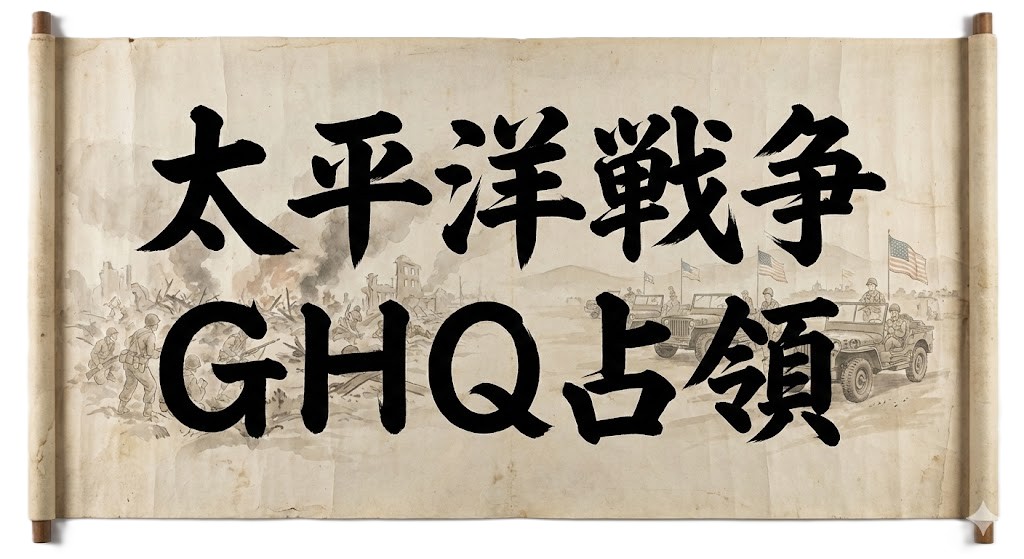
The Battle of Midway decisively doomed Japan’s Pacific War effort early on. However, the government’s fatal hesitation in accepting peace terms exponentially magnified national casualties. Ultimately, the Emperor’s intervention forced an unconditional surrender. Consequently, General MacArthur initiated an unprecedented, US-led sole occupation, rapidly driving Japan toward radical democratization and Westernization.
Japan’s strategic defeat occurred long before the summer of 1945. The Midowe Kaisen in 1942 obliterated four elite aircraft carriers and irreplaceable veteran pilots. Consequently, this catastrophic loss completely shattered Japan’s initial short-term decisive battle strategy. However, the government and military stubbornly continued futile resistance, desperately seeking favorable peace conditions.
The Allies rigidly demanded Mujoken Kofuku. Sadly, Japanese leaders harbored unrealistic expectations and fatally delayed their decision, inevitably inviting massive tragedies, including the atomic bombings. Ultimately, Showa Tenno (The reigning monarch) ended the war via the Gyokuon Hoso on August 15. Surprisingly, the broadcast meticulously avoided the word “surrender,” proving the leadership’s severe detachment from reality to the very end.
🔍 Key Takeaways 🔍
Early strategic collapse should have ended the war. However, the leadership’s fatal inability to accept defeat exponentially magnified civilian casualties. Ultimately, losing all negotiation leverage forced Japan to accept absolute American domination and sweeping social reforms.

On September 2, 1945, the formal surrender ceremony unfolded aboard the Senkan Mizuri in Tokyo Bay. Douglas MacArthur (The supreme commander) meticulously orchestrated this event far beyond a simple administrative procedure. Instead, he embedded a powerful political message, forcefully declaring a second, compulsory “opening” of defeated Japan by American forces.
Specifically, MacArthur specially imported the fragile flag from the Sasokehana-go, originally flown by Peri Teitoku. By displaying this historic artifact, MacArthur intensely projected America’s arrogant self-righteousness as the undisputed bringer of enlightenment. Consequently, this overwhelming theatrical display inflicted profound psychological humiliation upon the Japanese delegation, perfectly illustrating their new subordinate reality.
🔍 Key Takeaways 🔍
The surrender ceremony functioned as a powerful theatrical declaration of American supremacy. By explicitly linking the defeat to Perry’s historic arrival, MacArthur completely shattered Japanese pride, forcefully establishing absolute psychological dominance over the conquered nation.

Avoiding a German-style Bunkatsu Senryo stands as the most crucial element of post-war Japanese governance. Soviet dictator Joseph Stalin relentlessly demanded the territorial division of Hokkaido. However, the United States categorically rejected this aggressive interference. Consequently, Japan narrowly escaped the nightmare of national partition, falling under the sole administrative control of GHQ.
Harii Toruman (The resolute president) granted MacArthur absolute, dictatorial authority to lead this unprecedented occupation. While technically an Allied organization, GHQ essentially operated as a personalized “MacArthur Show,” heavily staffed by devoted American loyalists. Ultimately, this undivided power structure allowed MacArthur to rapidly and forcefully redesign Japan according to his specific personal ideals without external friction.
🔍 Key Takeaways 🔍
By fiercely rejecting Soviet interference, America secured exclusive control over the defeated nation. Consequently, this undivided occupation empowered a single absolute ruler to rapidly execute unified, radical societal reforms without diplomatic paralysis.
── Finally, let's recap with the summary and FAQ of this article.
Japan’s collapse, initiated by the disastrous loss of elite carriers at Midway, finally concluded with the agonizing acceptance of unconditional surrender. The arrival of GHQ temporarily stripped Japan of its national sovereignty. However, this total defeat simultaneously catalyzed a powerful departure from outdated militarism. The main points of this article are:
‣ The highly theatrical surrender aboard the USS Missouri.
‣ The establishment of an unprecedented, US-led sole occupation.
We hope these historical lessons offer valuable perspectives on how absolute defeat and undivided foreign intervention forcefully birthed a new democratic society.
Q1. When did Japan essentially lose the war?
Strategically, victory became completely impossible after losing four elite aircraft carriers and seasoned pilots at the Battle of Midway in 1942.
Q2. Why wasn’t Japan divided like Germany?
The United States categorically rejected Soviet demands to partition Hokkaido, stubbornly insisting on a US-dominated, unified occupation structure to prevent communist expansion.
Q3. What kind of authority did MacArthur wield?
As the Supreme Commander, he possessed absolute executive power over all administrative functions, effectively ruling as the ultimate dictator of post-war Japan.
コメント欄