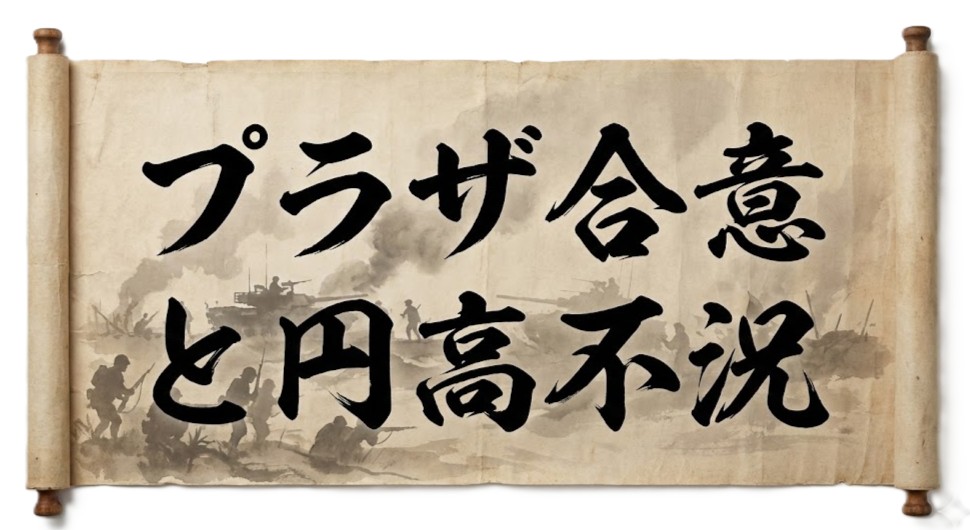
In the 1980s, escalating US-Japan trade friction ignited intense, racially charged “Japan Bashing.” To resolve this geopolitical crisis, the 1985 Plaza Accord artificially induced a massive yen appreciation. Consequently, this historical currency manipulation completely destroyed Japan’s export-driven competitiveness. Ultimately, sacrificing the real economy for diplomatic loyalty and international prestige triggered the devastating “Strong Yen Recession,” directly laying the chaotic groundwork for the infamous Bubble Economy.
As depicted in the popular 1992 novel Rising Sun, US-Japan relations had reached a terrifying boiling point. The ultimate symbol of this tragedy was the Vinsento Chin Jiken in 1982. The intense Japan Basshingu had escalated so violently across America that a Chinese-American was brutally murdered simply for looking Japanese.
At the time, Japan was not the only nation holding a trade surplus with the US; Canada and West Germany also maintained massive imbalances. Yet, Japan was relentlessly and exclusively targeted. This highly emotional hostility heavily reflected the historic Iero Periru, exposing deep-seated racial prejudice against a rapidly expanding Asian economic superpower.
🔍 Key Takeaways 🔍
The trade deficit evolved far beyond mere economics. Driven by intense emotional and racial hatred, American society clearly designated Japan as the absolute enemy. Violent public spectacles, like smashing Japanese cars with sledgehammers, demonstrated a terrifyingly dangerous level of national hysteria.

In 1985, global financial leaders convened in New York to establish the Puraza Goi. Their primary objective was artificially correcting the excessively strong US dollar. Previously, under the 360-yen Kotei Soba-sei, Japanese corporations ruthlessly weaponized this favorable exchange rate to mass-export incredibly cheap products globally.
However, this agreement fundamentally shattered the rules of international trade. For example, under a weak yen, a 10,000-yen television cost Americans around $27. Under the newly manipulated Hendo Soba-sei, that exact same television skyrocketed to over $45. Consequently, this sudden, artificially induced yen appreciation completely stripped Japanese exports of their critical price competitiveness, instantly transforming them into “expensive” luxury goods.
🔍 Key Takeaways 🔍
A rapidly strengthening yen functioned exactly like an automatic, massive price hike for overseas consumers. Through sheer financial manipulation, Japan’s incredibly popular, high-quality, and affordable electronics and automobiles suddenly became impossibly difficult to sell on the global market.

Japan ultimately surrendered to this disadvantageous agreement due to the Nichibei Anzen Hosho Joyaku. Entirely dependent on the US for military defense, Tokyo possessed zero diplomatic leverage. Furthermore, the government naively embraced the illusion that a “strong currency equals a strong nation.” Indeed, Japan’s dollar-denominated Kokunai Sosaisan violently spiked, granting the illusion of unprecedented global prestige.
However, the domestic reality was an absolute catastrophe. The post-war “winning formula”—reinvesting massive export profits into constant corporate expansion—completely collapsed. As overseas sales evaporated, corporate cash flows dried up. Consequently, the Japanese economy entirely lost its growth engine, plunging violently into the devastating Endaka Fukyo.
🔍 Key Takeaways 🔍
By prioritizing diplomatic loyalty and superficial international prestige, the government completely shattered the structural foundation of the real economy. Paralyzed by collapsing export profits and frozen wages, the panicked government eventually unleashed reckless monetary policies.

── Finally, let's recap with the summary and FAQ of this article.
The 1985 Plaza Accord, signed amidst the violent storm of Japan Bashing, irreversibly destroyed Japan’s traditional economic structure. The ensuing Strong Yen Recession decisively exposed the absolute limits of the post-war export-led model. The main points of this article are:
‣ The artificial devaluation of the dollar completely destroying Japanese price competitiveness.
‣ The collapse of the export engine plunging Japan into the Strong Yen Recession.
We hope these historical lessons offer valuable perspectives on how desperate diplomatic compromises and extreme currency manipulation paved the direct, chaotic path to the infamous Bubble Economy.
Q1. When and where was the Plaza Accord signed?
In September 1985, finance ministers and central bank governors from the G5 nations convened and finalized the historic agreement at the Plaza Hotel in New York City.
Q2. Why exactly does a strong yen devastate export companies?
It artificially drives up overseas retail prices, instantly killing sales volume. Furthermore, the actual yen value of the foreign currency earned is drastically reduced when brought back to Japan.
Q3. What happened after the Strong Yen Recession?
Desperate to stimulate the dying economy, the government slashed interest rates. This reckless monetary easing flooded the market with incredibly cheap cash, violently inflating stock and real estate prices to trigger the Japanese Bubble Economy.



コメント欄