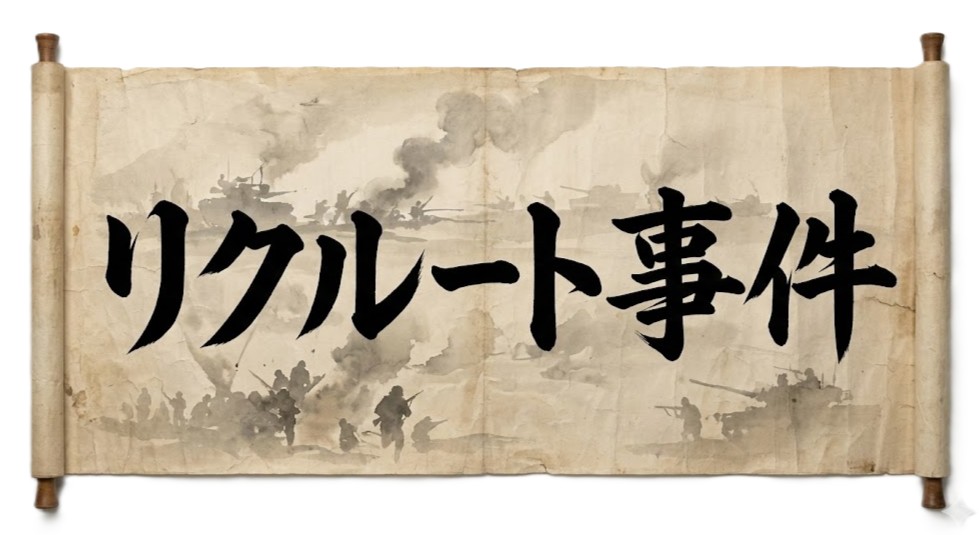
In the early 1990s, exactly as Japan faced a severe economic crisis, the ruling Liberal Democratic Party descended into catastrophic dysfunction. An absurd sex scandal quickly toppled Prime Minister Uno, highlighting a severe leadership vacuum. However, the ultimate death blow was the Recruit Scandal, an unprecedented bribery scheme using unlisted shares that exposed massive, systemic corruption across politicians, bureaucrats, and business leaders, completely shattering public trust in the post-war “Iron Triangle.”
During times of severe national financial crisis, citizens desperately demand strong, decisive leadership. However, in the early 1990s, the Jiyu Minshuto completely abandoned the steering wheel. The legendary Tetsu no Toraianguru that had engineered Japan’s post-war miracle suffered catastrophic mechanical failure. Shockingly, the nation churned through four different prime ministers in a chaotic six-year span.
The absolute pinnacle of this political absurdity was the spectacular downfall of Prime Minister Uno Sosuke. He wasn’t ousted for a major policy failure, but rather because he notoriously underpaid his geisha mistress. This deeply embarrassing, petty personal scandal vividly demonstrated that the ruling party’s talent pool was completely dry. Consequently, this devastating lack of basic leadership skills left the nation drifting dangerously toward the approaching economic iceberg.
🔍 Key Takeaways 🔍
Just as the economic bubble was bursting, the ruling party lost all crisis management ability. A humiliating carousel of short-lived prime ministers, culminating in a petty sex scandal, proved that the LDP was entirely consumed by internal dysfunction rather than national governance.

Systemic corruption was essentially a chronic illness in Japanese politics. Leaders like Tanaka Kakuei famously weaponized immense personal wealth to purchase bureaucratic loyalty and control Habatsu Seiji. For decades, the public largely tolerated this blatant “money politics.” As long as the economy was booming and incomes were rising, ordinary citizens accepted this corruption as a necessary evil for maintaining national stability.
However, the Rikuruto Jiken in 1988 completely destroyed this unspoken social contract. This was not a traditional, localized bribe of slipping cash into an envelope. This was a massive, sophisticated, and highly organized distribution of guaranteed wealth that infected the entire political spectrum. When the public realized that both the ruling party and the opposition were gleefully participating in this unprecedented greed, their tolerance violently evaporated.
🔍 Key Takeaways 🔍
The Japanese public historically ignored political corruption as long as the economy grew. However, the sheer scale and systemic nature of the Recruit Scandal crossed a fatal line, completely destroying the public’s willingness to look the other way.

Ezoe Hiromasa, the founder of the rapidly growing information company Recruit, engineered a brilliant trap using his subsidiary, Cosmos. Instead of handing over cash, he offered powerful elites the exclusive right to purchase unlisted Cosmos shares just before its Shinki Kabushiki Kokai. Because Japanese IPOs at the time practically guaranteed an immediate, massive price surge, this was essentially a risk-free license to print money.
This sophisticated technique functioned as high-level, pseudo-legal Mane Rondaringu. The list of recipients was absolutely staggering. It included current and former Prime Ministers like Takeshita Noboru and Nakasone Yasuhiro, prominent opposition leaders, top executives at the telecom giant NTT, and even senior executives at major national newspapers. Discovering that the entire national elite—including the media meant to act as watchdogs—were happily gorging themselves on this illicit wealth plunged the public into deep despair.
🔍 Key Takeaways 🔍
The Recruit Scandal utilized guaranteed stock profits as a sophisticated form of bribery. The shocking revelation that politicians, corporate titans, and media watchdogs were all complicit completely shattered public faith in every major Japanese institution.
── Finally, let's recap with the summary and FAQ of this article.
Just as Japan required strong leadership to navigate the impending economic collapse, the political establishment spectacularly self-destructed. The relentless cascade of scandals, culminating in the Recruit affair, fatally exposed the absolute moral bankruptcy of the post-war elite. The main points of this article are:
‣ The massive scale of the Recruit Scandal destroyed the public’s tolerance for “necessary” corruption.
‣ The use of unlisted shares implicated the entire establishment, from politicians to media watchdogs.
We hope these historical lessons offer valuable perspectives on how sophisticated, systemic corruption can instantly demolish decades of public trust and paralyze a nation during its most critical hours of need.
Q1. How was the Recruit Scandal originally discovered?
It began in 1988 with a seemingly minor local news report investigating a deputy mayor in Kawasaki City who received suspicious shares. This single thread eventually unraveled the massive, nationwide conspiracy.
Q2. Why were there so many prime ministers in such a short time?
The LDP was completely paralyzed by rolling scandals. As soon as one prime minister took office, new revelations of corruption or embarrassing personal misconduct forced their immediate resignation, destroying all political stability.
Q3. Why was the involvement of media executives so damaging?
The press is supposed to act as the ultimate watchdog against political and corporate corruption. Discovering that major newspaper executives were secretly accepting the same bribes completely destroyed the public’s trust in objective journalism.
コメント欄