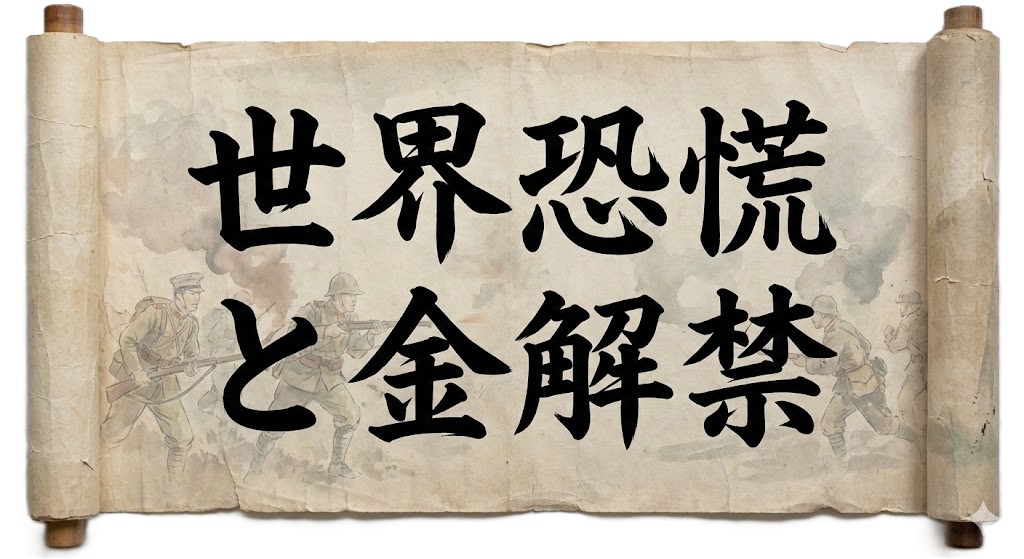
The early 1930s collapse of civilian control definitively pushed Japan toward a reckless war. The devastating global depression and failed economic policies completely ruined rural livelihoods. Consequently, widespread public despair in corrupt political parties allowed the military, shielded by supreme command independence, to seize absolute power. Ultimately, the profound anger of radicalized young officers drove the nation into catastrophic conflict.
Japan’s defeat in the Pacific War was mathematically inevitable. Why, then, did the nation choose such a reckless path? The Sekai Kyoko severely crippled the resource-poor country. Plummeting prices for key exports like silk and rice instantly decimated rural incomes, plunging farmers into extreme poverty.
Furthermore, Hamaguchi Osachi (The determined prime minister) and his Rikken Minseito cabinet initiated the Kin Kaikin. This ill-timed financial policy aimed to restore international economic credibility. However, executing this during a severe depression proved worse than the disease itself. Consequently, this catastrophic mismanagement ignited massive social unrest as bankruptcies surged and unemployment exploded.
🔍 Key Takeaways 🔍
Global economic collapse devastated Japan’s vulnerable economy. Furthermore, disastrous government policies exponentially worsened the crisis. This extreme poverty bred explosive public dissatisfaction, completely destabilizing the social order.

During the 1920s, Seito Seiji had steadily established itself in Japan. However, catastrophic economic failures forced political parties to abandon their role as defenders of the people. This perceived political favoritism toward the Zaibatsu and urban elites utterly shattered public faith in democracy.
Specifically, this extreme Noson no Hihei slashed average rural incomes by 67%. Extreme poverty forced desperate farmers into tragic actions, such as selling their daughters to survive. Therefore, politicians stubbornly clinging to the Kin Kaikin just to save face appeared utterly unforgivable. Ultimately, this rigid political stance transformed democratic hopes into pure rage, labeling politicians as mere defenders of the privileged class.
🔍 Key Takeaways 🔍
Politicians appeared completely indifferent to the starving populace. This perceived alliance with the wealthy elite utterly shattered public faith in democracy. Consequently, the desperate citizenry abandoned all hope in their elected representatives.

The military rapidly advanced to fill this massive political vacuum. The Meiji Constitution featured Tosui-ken no Dokuritsu, a structural flaw dictating that the military answered solely to the Emperor, bypassing civilian government control entirely. Furthermore, the government’s strict adherence to the Washinton Taisei infuriated military leaders, who perceived this international diplomacy as humiliating subservience to Western powers.
Specifically, the Seinen Shoko deeply understood the rural suffering, as many hailed from these impoverished farming villages. They firmly believed that corrupt politicians and the Zaibatsu were actively destroying Japan. Consequently, these radicalized officers embraced extreme ideologies, eagerly utilizing physical force to enact “justice.” This explosive energy directly ignited the Manchurian Incident, starting the inevitable countdown to national ruin.
🔍 Key Takeaways 🔍
A fatal constitutional loophole allowed the military to operate unchecked. By absorbing the explosive anger of the impoverished public, the military transformed into a rogue entity. Ultimately, the desperate citizens supported these radical officers as strong, decisive leaders.
── Finally, let's recap with the summary and FAQ of this article.
As analyzed, Japan’s disastrous path to war originated from catastrophic economic policies and the resulting political distrust. When survival foundations collapse and leaders appear apathetic, desperate populations naturally gravitate toward extreme, hardline factions. The main points of this article are:
‣ Corrupt political parties completely lost public trust by favoring the elite.
‣ Constitutional flaws enabled the unchecked rise of radical military forces.
We hope these historical lessons offer valuable perspectives for navigating modern societal challenges, proving that extreme crises consistently prioritize emotional reactions over rational decisions.
Q1. Why execute the Kin Kaikin during a massive depression?
The government intended to restore international financial credibility and national prestige. However, the catastrophic timing exponentially worsened the domestic economic collapse.
Q2. Why did the military vehemently despise party politics?
They firmly believed politicians colluded with the Zaibatsu while completely ignoring rural starvation. Furthermore, they aggressively condemned the government’s diplomatic cooperation with Western powers as weak and humiliating.
Q3. What is the primary lesson from this historical tragedy?
Severe economic hardship readily breeds radical ideologies. When governments lose public trust, desperate societies risk pivoting toward extreme and destructive directions.
コメント欄