The collapse of Japan’s Bubble Economy was massively accelerated by extreme political corruption and fatal central bank errors. As politicians like Kanemaru Shin brazenly demanded unprecedented bribes—often facilitated by Yakuza syndicates—public trust completely evaporated. Simultaneously, the Bank of Japan’s aggressively rapid interest rate hikes crashed the real estate market, burying the financial sector under a historically catastrophic mountain of bad debt and plunging the nation into decades of stagnation.
Historically, the “going rate” for political bribes in Japan hovered around 3% of a public project’s value. This was the unspoken, corrupt tax for doing business. However, the absolute madness of the Bubble Economy completely obliterated the politicians’ sense of reality. Fueled by the massive ocean of excess cash generated after the Puraza Goi, elite demands outrageously skyrocketed to a staggering 10%.
Consequently, the Japanese public experienced a brutal awakening. For decades, citizens had patiently endured high prices caused by corporate Karuteru and grueling working hours, genuinely believing their sacrifices enriched the entire nation. However, massive scandals like the Rikuruto Jiken completely shattered this illusion. As ordinary people struggled with skyrocketing rent, they watched elites violently gorge themselves on illicit wealth, irreparably destroying the social contract.
🔍 Key Takeaways 🔍
The Bubble era mutated political corruption from a “tolerated necessity” into naked, gluttonous greed. When bribe demands hit 10%, the public finally realized that the post-war promise of “shared national wealth” was a complete lie protecting a corrupt elite.

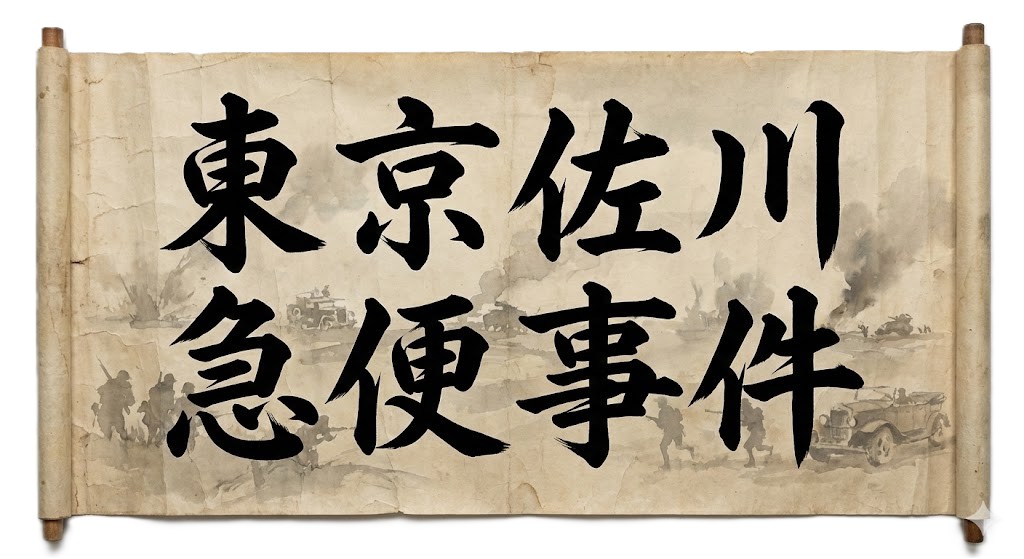
In 1992, the Tokyo Sagawa Kyubin Jiken horrified the nation. Investigators discovered that Kanemaru Shin (The undisputed political Don) had received an illegal, untraceable donation of 500 million yen. The sheer audacity of the crime was perfectly captured by its delivery method: the bribe was so massive that it included solid gold bars, requiring a literal shopping cart to transport. This absolute circus instantly vaporized the “clean” image of the ruling cabinet.
Even more terrifying was the undeniable proof of deep Yakuza involvement. Organized crime syndicates had easily secured massive, unsecured bank loans to aggressively speculate on real estate. Their preferred method was Jiage. In Osaka alone, police recorded over 1,600 violent incidents where Yakuza thugs rammed dump trucks into homes or threw venomous centipedes through windows to terrorize tenants. The government and the banks were essentially funding domestic terrorism.
🔍 Key Takeaways 🔍
The Kanemaru scandal definitively proved that the ruling party, major banks, and violent Yakuza syndicates were operating as a single, corrupt enterprise. The state was actively financing violent criminals to forcibly extract real estate wealth from ordinary citizens.

In 1990, the Nippon Ginko finally attempted to halt the madness by raising interest rates. However, they completely failed to execute a Sofuto Randingu. The BOJ slammed on the economic brakes so violently that the real estate market instantly froze. Banks, which had recklessly loaned trillions based solely on the myth that land prices never fall, were suddenly crushed by the dual impact of surging interest rates and collapsing collateral values.
Consequently, the financial sector was buried under a catastrophic mountain of Furyo Saiken, reaching an apocalyptic 6% to 8% of total assets. To understand this scale: during the devastating Showa Financial Crisis of 1927, bad debt only reached 2%. Because the elite bureaucrats had only ever experienced continuous post-war growth, they completely lacked the crisis management experience necessary to handle a crash of this magnitude, fatally delaying crucial interventions.
🔍 Key Takeaways 🔍
Lacking crucial crisis experience, the BOJ crashed the economy by raising interest rates too aggressively. This sudden shock instantly transformed speculative loans into a historically unprecedented mountain of bad debt, permanently crippling the banking sector.

── Finally, let's recap with the summary and FAQ of this article.
The catastrophic collapse of the Bubble Economy was not a natural disaster, but a profoundly human failure. The toxic combination of unprecedented political greed, Yakuza collusion, and severe central bank incompetence locked Japan into a downward spiral. The main points of this article are:
‣ The Kanemaru scandal exposed deep, violent collusion between politicians, banks, and Yakuza.
‣ The BOJ’s aggressive interest rate hikes created a historically catastrophic bad debt crisis.
We hope these historical lessons offer valuable perspectives on how institutional arrogance and unchecked corruption can completely destroy decades of national wealth and trigger long-term economic stagnation.
Q1. Why was a shopping cart used to deliver Kanemaru’s bribe?
The illegal donation was worth a staggering 500 million yen. Because the payment included incredibly heavy solid gold bars along with massive stacks of cash, it was literally too heavy for a person to carry by hand.
Q2. What exactly did “Jiage” (land sharking) entail?
Yakuza thugs utilized extreme psychological and physical violence to force stubborn tenants to abandon valuable real estate. Tactics included ramming dump trucks into living rooms, arson, and throwing venomous pests into homes.
Q3. Why was the Bank of Japan so unprepared for the crash?
The entire generation of BOJ leadership had only ever experienced the continuous, miraculous post-war economic expansion. There was absolutely no one left in the institution with practical experience in managing a severe, systemic financial collapse like the 1927 crisis.
コメント欄