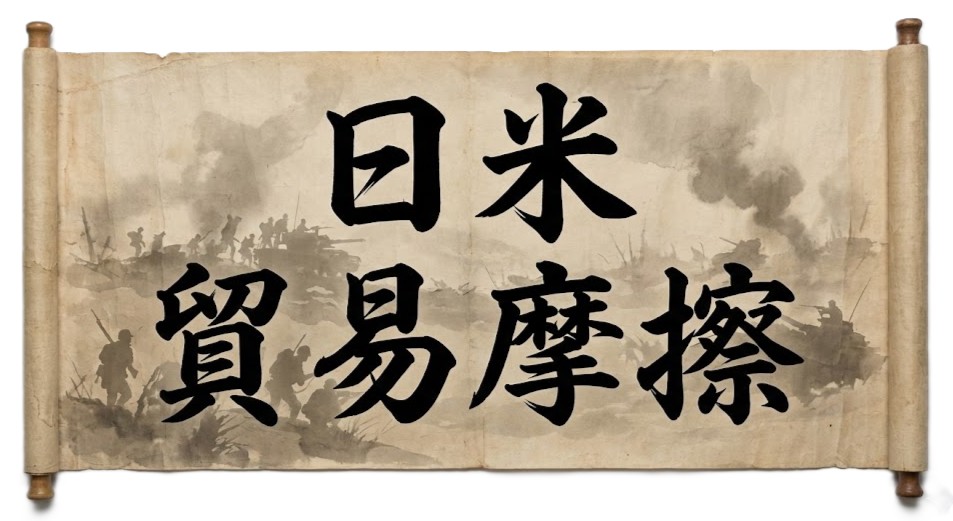
In 1987, Paul Kennedy’s *The Rise and Fall of the Great Powers* shocked the world by suggesting Japan’s imminent economic supremacy over a declining United States. Fueled by the highly efficient, state-guided “Japan Inc.” model, Japanese corporations decimated American manufacturing sectors, particularly in electronics and automobiles. Consequently, this explosive economic conquest triggered massive, racially charged “Japan Bashing” across America, marking the turbulent peak of Japan’s post-war miracle just before the devastating bubble collapse.
In 1987, Paul Kennedy (The visionary historian) published Taikoku no Kobo, triggering a massive global debate. By meticulously analyzing 500 years of history, he argued that empires collapse when massive military expenditures suffocate domestic economic growth. However, what truly shocked contemporary readers wasn’t just the academic theory, but a highly provocative visual prophecy hidden inside the book.
Specifically, the Kuchie no Irasuto in the first edition depicted a weary “Uncle Sam” stepping down from the global winner’s podium, replaced by a triumphant “Japanese Salaryman.” This wasn’t mere fantasy; it perfectly captured the terrifyingly real zeitgeist of the late 1980s. Consequently, this single image brilliantly summarized America’s deep geopolitical anxiety and Japan’s absolute, soaring national confidence as it rapidly approached global economic supremacy.
🔍 Key Takeaways 🔍
A prominent historian explicitly warned that America’s military overextension would lead to its economic defeat by Japan. This bold prophecy, visually represented by a Japanese salaryman dethroning Uncle Sam, perfectly captured the intense anxiety and supreme confidence of the era.

This terrifyingly rapid growth was engineered by a highly specific system. Building upon Ikeda Hayato’s original blueprint, Japan perfected the Tetsu no Toraianguru. This unbreakable alliance between the LDP, government ministries, and corporate conglomerates functioned so efficiently that terrified foreign competitors dubbed the entire nation “Japan Inc.”
Crucially, this economic machine operated under the protective umbrella of Pakusu Amerikan’na. Because the US handled national security, Japan could legally suppress its defense budget, funneling almost all national resources directly into industrial expansion. Consequently, Japanese citizens enthusiastically embraced Kennedy’s book, absolutely convinced that their unique, state-guided capitalist model had permanently conquered the global economy.
🔍 Key Takeaways 🔍
“Japan Inc.” was a devastatingly efficient alliance of politicians, bureaucrats, and corporations. By outsourcing national defense to the US, Japan concentrated all its energy on economic warfare, achieving unprecedented, world-dominating prosperity.

Initially, Washington nurtured Japan as a vital Cold War partner. However, tolerance evaporated when Japanese corporations utilized massive domestic profits to launch ruthless Danpingu campaigns in the US. Consequently, high-quality, ultra-cheap Japanese imports completely annihilated the American television industry and devastated Detroit’s legendary auto manufacturing sector.
This severe industrial destruction ignited furious Japan Basshingu. When flush Japanese conglomerates audaciously purchased iconic American symbols like Columbia Pictures and the Rockefeller Center, the American public panicked, viewing it as a literal economic invasion. Furthermore, this conflict was deeply infected by Jinshu Seiji; the terrifying realization that an Asian nation was economically conquering the white superpower transformed a trade dispute into an intense, emotional, and often racist national hysteria.
🔍 Key Takeaways 🔍
Japan’s predatory export strategies utterly destroyed major American manufacturing sectors. This economic devastation, combined with high-profile real estate purchases, triggered massive, racially charged paranoia and furious anti-Japanese political movements across the US.
── Finally, let's recap with the summary and FAQ of this article.
Japan’s miraculous ascent to the world’s second-largest economy successfully validated Paul Kennedy’s bold prophecy. However, the aggressive, uncompromising tactics of “Japan Inc.” severely fractured its most crucial geopolitical alliance. The main points of this article are:
‣ The terrifying efficiency of the state-guided “Japan Inc.” model.
‣ The furious, racially charged American backlash against Japanese economic conquest.
We hope these historical lessons offer valuable perspectives on how explosive, unbalanced economic expansion inevitably generates massive geopolitical friction, a reality that deeply echoes in today’s global trade conflicts.
Q1. Why did the US initially help rebuild Japan?
During the Cold War, Washington desperately needed Japan to function as a powerful, capitalist fortress against Soviet and Chinese communist expansion in Asia. Therefore, they aggressively nurtured Japan’s early economic recovery.
Q2. What exactly was “Japan Inc.”?
It was a highly derogatory, yet accurate, Western term describing how Japanese politicians, elite bureaucrats, and massive corporations colluded so seamlessly that the entire nation operated like a single, ruthless mega-corporation.
Q3. What is the modern lesson of “Japan Bashing”?
Rapid, aggressive economic dominance by a rising power will inevitably trigger severe, often irrational, protectionist backlashes from established superpowers. Economic policy is never isolated from emotional and racial politics.
コメント欄