The transition from the ancient Jomon to the agricultural Yayoi period marks the greatest turning point in early Japanese history. The invention of pottery initially established a highly stable hunting and gathering society. Subsequently, the introduction of rice farming and advanced metal tools triggered a massive population explosion. Ultimately, genetic fusion between indigenous populations and continental immigrants successfully shaped the ancestors of modern Japanese people.
Morse Edward (The American zoologist) discovered cord-marked pottery at the Omori Shell Mound in 1877.
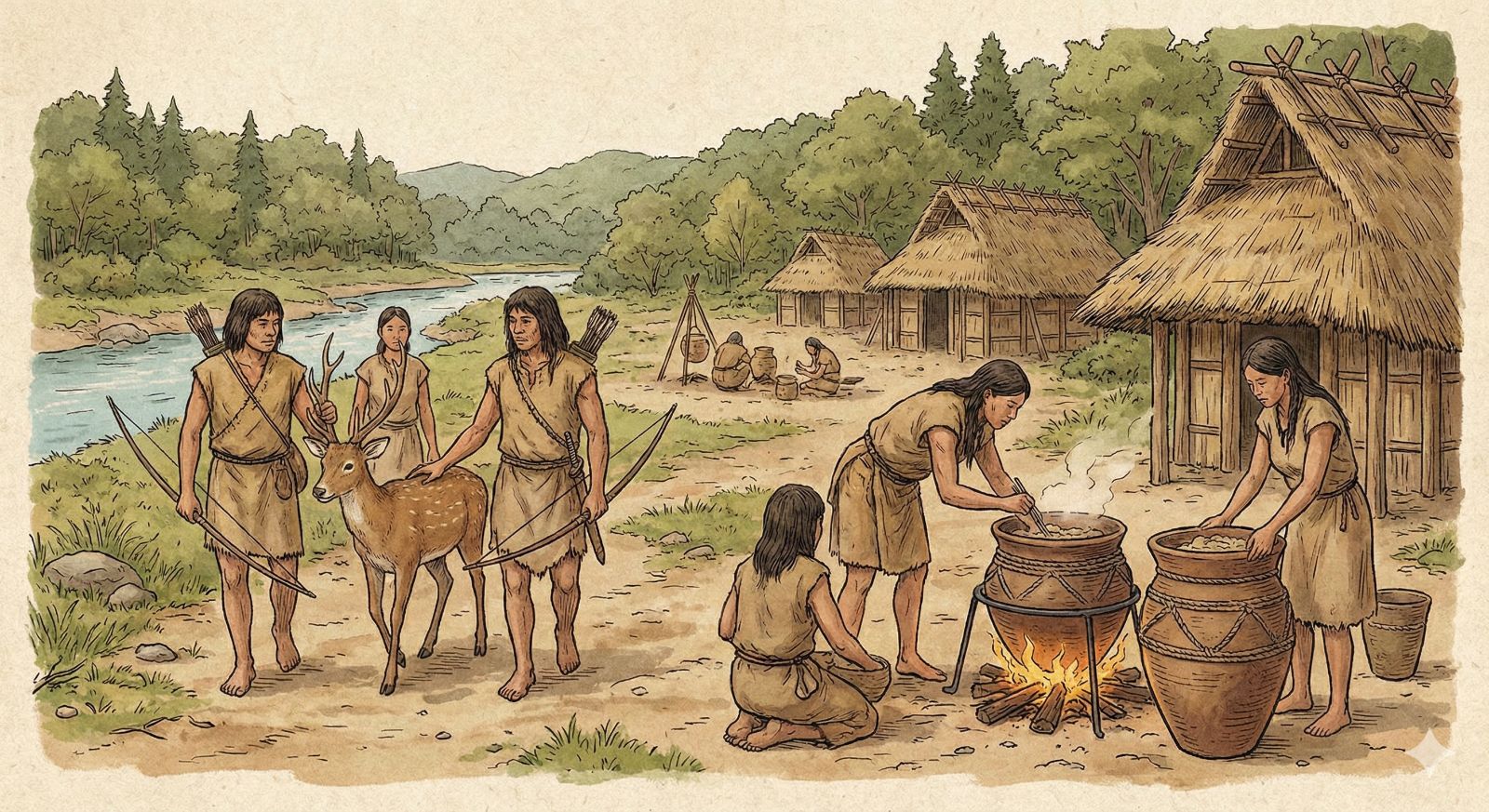
This groundbreaking discovery completely revolutionized daily life for early inhabitants. Recent excavations reveal that Japanese pottery ranks among the oldest globally, proving that this simple invention kickstarted national history.
Consequently, boiling technology made hard plants edible and vastly expanded available food sources. Furthermore, the invention of the bow and arrow optimized hunting efficiency in colder climates.
These dual technological advancements successfully boosted the mid-Jomon population to approximately 260,000 people, establishing peaceful, settled village societies.
🌿 Key Takeaways 🌿
The combination of pottery for boiling and bows for hunting constituted a survival revolution. Therefore, expanded food options drove population growth and established settled villages long before formal agriculture began.
Arisaka Shozo (The observant student) unexpectedly discovered smooth, distinct pottery in Mukogaoka Yayoi-cho, Tokyo, in 1884. This accidental find officially gave the “Yayoi” era its name.
Surprisingly, modern Tanso Nendai Sokutei pushes the beginning of this transformative period back to around 1000 BC.
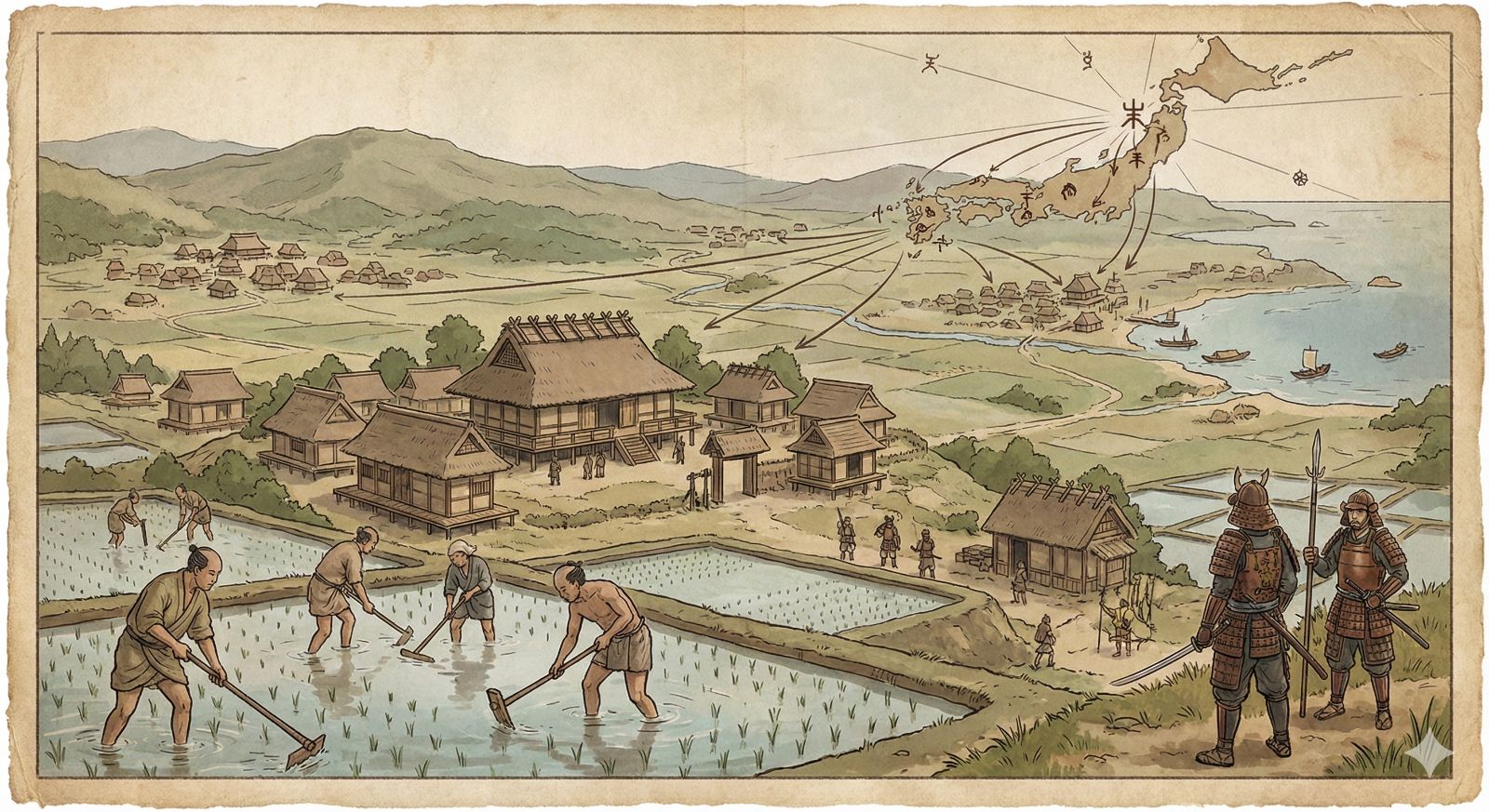
Continental immigrants fleeing conflicts introduced Suiden Inasaku and advanced metalworking. These imported technologies fundamentally restructured society.
Paddy farming guaranteed an overwhelmingly stable food supply, while iron agricultural tools drastically improved production efficiency, shifting the culture from gathering to mass production.
🌿 Key Takeaways 🌿
Arisaka’s discovery confirmed the dawn of a new era. Continental high-tech agriculture and metal tools permanently shifted the Japanese societal structure, generating unprecedented stability and growth.
Historically, scholars believed a violent clash of civilizations occurred between Jomon and Yayoi peoples. However, recent Genome Kaiseki completely overturns this aggressive conquest theory.
The genetic data strongly suggests a gradual, peaceful interbreeding and fusion process over centuries, expanding the population to one million.
Nevertheless, agricultural wealth inevitably sparked conflicts. Disputes between villages over fertile land and water resources necessitated strong leadership.
Consequently, victorious leaders consolidated regional power, forming numerous Shuchokoku. These early chiefdoms laid the definitive political foundation for the ancient Japanese state.
🌿 Key Takeaways 🌿
Science proves gradual genetic fusion shaped the population rather than sudden violent conquest. However, agricultural surplus generated territorial disputes, birthing the first Shuchokoku and initiating Japan’s political evolution.

New technologies and their resulting lifestyle changes consistently drive historical progress. Pottery altered diets, rice farming transformed societies, and metal tools built nations. The main points of this article are:
✅ Rice farming and metal tools generated population growth and early states.
✅ Genetic fusion, rather than conflict, physically shaped the Japanese people.
We hope these historical insights broaden your perspective on human evolution and societal development.
Q1. Exactly when did the Yayoi period begin?
Recent carbon dating evidence strongly suggests it began between 1000 BC and 900 BC. This scientific timeline significantly pushes back earlier historical estimates.
Q2. What was the primary purpose of Dotaku?
While exact details remain mysterious, ancient communities primarily utilized these bronze bells as ceremonial tools during agricultural rituals to ensure bountiful harvests.
Q3. Why was the invention of pottery so revolutionary?
Pottery enabled the boiling of hard, previously inedible plants. This crucial cooking capability stabilized the food supply and directly facilitated permanent human settlement.