While many prestigious clans perished during the turbulent Sengoku period, the Mori clan successfully rose from total obscurity to achieve absolute regional power. Descending from Ooe no Hiromoto, an elite Kamakura bureaucrat, they gradually transformed into local warriors and settled in Aki Province. Eventually, under the brilliant leadership of Mori Motonari, they manipulated pragmatic retainers and leveraged constant military victories to conquer the entire Chugoku region.
Surprisingly, the Mori clan originated from Kyoto aristocracy. Minamoto no Yoritomo (The first Shogun) established the Kamakura Bakufu with fierce but administratively inexperienced warriors.
Therefore, he heavily relied on highly educated nobles like Ooe no Hiromoto (The elite bureaucrat) as the political brain to operate the new government.
Following Hiromoto’s death, his fourth son Mori Suemitsu (The warrior founder) inherited the Mori estate.
He actively discarded his aristocratic identity to live as a land-rooted warrior. Consequently, this adaptable transition from elite bureaucrats to provincial fighters prepared the family for the impending turbulent era.
🔍 Key Takeaways 🔍
The Mori clan’s true strength stemmed from fusing inherited political intelligence with practical military capability. Their flexible transition from Kyoto aristocrats to local warriors secured their foundational survival.
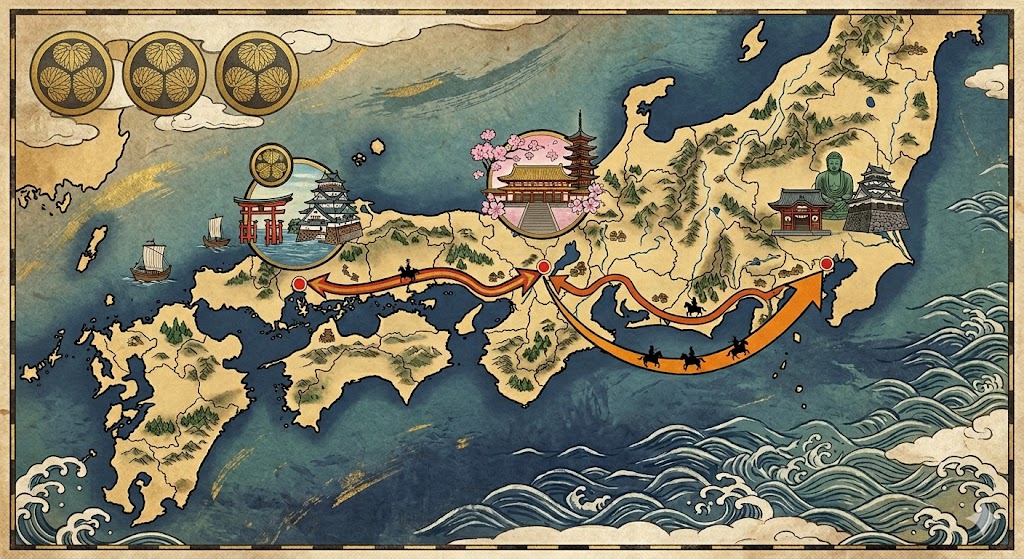
During the late Kamakura period, Mori Tokichika (The exiled strategist) lost his prominent Rokuhara Tandai position and retreated to Kawachi Province.
During the subsequent Nanboku-cho turmoil, his great-grandson Mori Motoharu (The pragmatic survivor) swiftly allied with Ashikaga Takauji. This timely decision firmly secured the clan’s foothold in the Chugoku region.
Motoharu settled in Yoshida-no-sho, Aki Province, establishing his status as a Kokujin Ryoshu. However, massive Shugo Daimyo like the Ouchi and Yamana constantly threatened to absorb his small territory.
Surprisingly, this relentless high-tension environment actively strengthened the clan’s internal unity and cultivated the resilience necessary for their future explosive expansion.
🔍 Key Takeaways 🔍
Losing central political power forced the Mori to evolve into locally rooted Kokujin. Enduring decades of pressure between massive rival Daimyo forged their unyielding perseverance and deeply honed their survival instincts.
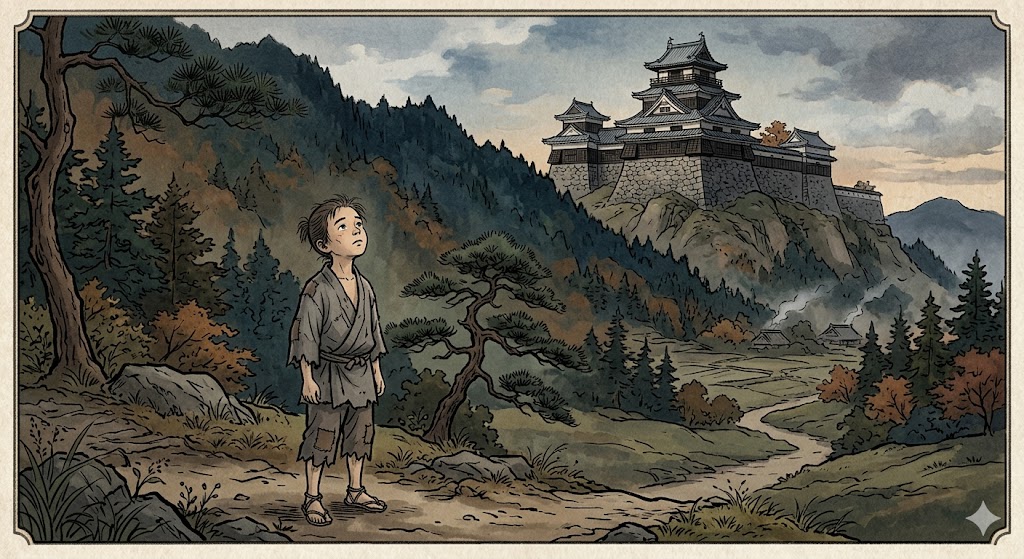
During the early Sengoku period, the Mori clan faced imminent extinction. Evicted from his own castle, the young Mori Motonari (The beggar prince) endured extreme humiliation.
However, following the sudden deaths of his brother and nephew, his retainers elevated him to clan head. He immediately plunged into a brutal survival game, brilliantly manipulating the power dynamics between giant rival clans.
Sontoku Kanjo completely dictated warrior loyalty; retainers instantly abandoned weak lords. Motonari perfectly understood this cold reality.
Therefore, continuous military victory and constant territorial distribution remained absolutely necessary. Ultimately, his legendary strategic brilliance stemmed from the crushing pressure to constantly conquer and reward his pragmatic vassals to prevent internal betrayal.
🔍 Key Takeaways 🔍
Sengoku loyalty required constant financial compensation. Motonari’s miraculous rise from a dispossessed youth to a regional hegemon was driven by the absolute necessity to keep winning and distributing land.

The Mori clan survived the Sengoku period by flexibly transforming from aristocrats to local warriors. Motonari’s explosive expansion relied entirely on extreme realism and an obsessive drive to satisfy his retainers’ desires through constant victory. Ultimately, Gekokujo was not mere betrayal; it was the ultimate reward for supreme adaptability. The main points of this article are:
‣ Patient endurance rooted deeply in the provinces.
‣ Pragmatic management uniting profit-driven retainers.
We hope these historical lessons offer valuable perspectives for navigating your own complex professional and personal environments.
Q1. Where did the Mori clan originally come from?
Their ancestor Ooe no Hiromoto was a Kyoto aristocrat. They later moved to the Mori estate in Sagami Province (Kanagawa) before finally settling in Aki Province (Hiroshima).
Q2. What does “Beggar Prince” mean?
It was the derogatory nickname for Motonari during his childhood after retainers hijacked his castle following his father’s retirement. This rock-bottom experience forged his mental resilience.
Q3. Why did Motonari have to keep winning wars?
Because Sengoku warriors operated on strict Sontoku Kanjo (cost-benefit calculations). Without continuous victories to provide new lands as salary, his retainers would have inevitably betrayed him.


