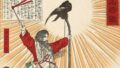
Toyotomi Hideyoshi (The ambitious commoner) utilized speed and communication to rapidly ascend to supreme power following Nobunaga’s death. He executed the miraculous Chugoku Ogaeshi to defeat Akechi Mitsuhide. Subsequently, his masterful Nemawashi secured his dominance in the succession dispute. Furthermore, he leveraged the imperial authority of Kanpaku to subjugate Tokugawa Ieyasu. However, his reckless Korean invasions ultimately shortened the lifespan of his robust regime.
Hideyoshi’s greatest weapon was rapid decision-making. Upon hearing of Nobunaga’s assassination, he immediately concealed the truth and finalized a peace treaty with the Mori clan.
Consequently, he executed the Chugoku Ogaeshi, marching his entire army back to Kyoto at an impossible speed.
This rapid mobilization allowed him to defeat Akechi Mitsuhide at the Yamazaki no Tatakai before any other vassals could react.
If this peace treaty or the subsequent march had been delayed, supremacy would have passed to another lord. Therefore, this decisive speed and immediate execution transformed the lowly peasant into the undisputed frontrunner for national unification.
🔍 Key Takeaways 🔍
Unforeseen crises require immediate action. Hideyoshi’s miraculous initial response speed decisively elevated him above his rivals, proving that rapid execution captures unparalleled opportunities.

Following Mitsuhide’s defeat, the Kiyosu Kaigi convened to determine the Oda clan’s future. Before the conference began, Hideyoshi conducted extensive Nemawashi to systematically secure vital allies.
Furthermore, he dramatically presented the infant Sanboshi as the legitimate heir to the Oda legacy.
This theatrical display of loyalty completely dictated the conference’s momentum.
Consequently, his meticulous preparation and manipulative communication easily outmaneuvered senior retainers, granting him practical control over the Oda faction without crossing swords.
🔍 Key Takeaways 🔍
Battles are often won before they begin. Hideyoshi avoided direct confrontation by securing prior consensus and establishing unassailable legitimacy, highlighting the absolute power of strategic communication.

Despite his momentum, Hideyoshi struggled to defeat Tokugawa Ieyasu (The patient strategist) militarily during the Komaki-Nagakute no Tatakai.
Therefore, he drastically shifted his strategy. Instead of pursuing the military title of Shogun, he acquired the supreme aristocratic title of Kanpaku.
This unprecedented maneuver utilized the Chotei to politically encircle his rival. As Kanpaku, Hideyoshi officially outlawed private warfare.
Consequently, fighting Hideyoshi became treason against the Emperor. This flexible paradigm shift forced his strongest rival into submission without further bloodshed.
🔍 Key Takeaways 🔍
When physical force fails, superior authority prevails. Hideyoshi neutralized a military equal by fundamentally changing the rules of engagement, demonstrating that flexible, rational thinking secures ultimate victory.

Toyotomi Hideyoshi seized control of Japan through unmatched speed, masterful negotiation, and the brilliant manipulation of traditional authority. However, his later overseas ambitions exhausted his forces and fractured his legacy. By analyzing his rise and fall, we learn the vital importance of adaptability and knowing one’s limits. The main points of this article are:
‣ Winning without fighting via strategic groundwork (Nemawashi).
‣ Overexpansion and unchecked ambition breed self-destruction.
We hope these historical lessons offer valuable perspectives on leveraging communication and adaptability to overcome any disadvantage.
Q1. Why didn’t Hideyoshi use fear to rule like Nobunaga?
Hideyoshi understood human psychology. He realized that rewarding allies and winning hearts was a far more efficient and stable method of governance than ruling through terror.
Q2. What is the difference between Kanpaku and Shogun?
The Shogun is the supreme military leader, while the Kanpaku is the highest advisor to the Emperor. Blocked by his peasant lineage from becoming Shogun, Hideyoshi ruled through the ultimate aristocratic authority of Kanpaku.
Q3. What modern lesson can we learn from Hideyoshi’s life?
Speed and strategic negotiation can overcome humble origins. However, his downfall teaches us that losing humility and overextending your capabilities after achieving success will ultimately destroy everything you built.