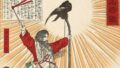
During the Nara period, heavy reliance on Buddhist statecraft led to massive religious corruption, forcing the court to relocate the capital to Heiankyo. Subsequently, the collapse of the state land management system birthed vast private estates, which necessitated hiring professional armed guards. Ultimately, these hired warriors—the legendary samurai—exploited aristocratic power struggles to seize political control over the entire nation of Japan.
Eighth-century politics heavily relied on the Chingo Kokka ideology. Consequently, Buddhist institutions accumulated immense wealth and began violently interfering in state affairs.
This corruption peaked when Dokyo (The ambitious cleric) nearly hijacked the imperial throne, sending shockwaves through the ancient government.
Therefore, Kanmu Tenno (The reformist emperor) executed a drastic political reset. He abandoned the tainted city of Nara and relocated the capital to Heiankyo in 794.
This strategic geographic shift successfully severed the government’s ties with established religious factions, briefly restoring Emperor-centric rule.
🔍 Key Takeaways 🔍
Excessive religious power nearly destroyed the imperial lineage. Relocating the capital functioned as a hard system reset, allowing the Emperor to dismantle corrupt alliances and rebuild the government from scratch.

Beyond the capital, the state’s public land system collapsed under the weight of crushing taxes. To encourage agriculture, the desperate government enacted the Konden Einen Shizai Ho in 743.
Consequently, this law allowed wealthy aristocrats and temples to legally accumulate massive private estates, known as Shoen.
Simultaneously, Sakanoue no Tamuramaro (The supreme commander) waged intense northern military campaigns against Aterui (The fierce rebel leader).
Ultimately, the combination of this brutal combat experience and the desperate need to protect the new, unregulated private Shoen estates forged a professional class of armed guards—the origin of the samurai.
🔍 Key Takeaways 🔍
The collapse of state land management initiated a survival-of-the-fittest era where private military defense became essential. The samurai were born out of absolute economic necessity, not noble chivalry.

Samurai influence exploded, horrifying the capital during the Taira no Masakado no Ran. Meanwhile, Kyoto nobles arrogantly enjoyed the decadent zenith of Sekkan Seiji.
However, this peaceful aristocratic dominance fractured when retired emperors established the Insei system to counter Fujiwara influence.
These cloistered rulers increasingly deployed samurai forces to suppress violent monastic protests and fight rival nobles. Consequently, this fatal aristocratic reliance on private military muscle allowed the warriors to realize their true strength.
Ultimately, Taira no Kiyomori (The military dictator) leveraged this dynamic to completely hijack the national government, ending aristocratic supremacy.
🔍 Key Takeaways 🔍
Aristocrats fatally over-relied on military contractors to settle their internal political disputes. Consequently, the hired guard dogs eventually devoured their masters and claimed the nation for themselves.

The era spanning the Nara and Heian periods dramatically illustrates the migration of absolute power from Buddhist clerics to Kyoto aristocrats, and finally to regional warriors. By analyzing this turbulent timeline, we understand the origins of Japan’s martial history. The main points of this article are:
‣ The collapse of state land ownership birthed the samurai class.
‣ Aristocratic power struggles facilitated the ultimate samurai takeover.
We hope these historical insights illuminate how systemic failures often pave the way for completely new structures of power and authority.
Q1. Why did Kanmu Tenno move the capital to Heiankyo?
He needed to geographically distance the government from the excessively powerful and corrupt Buddhist temples in Nara. This move allowed him to cleanly re-establish Emperor-centric political authority.
Q2. What exactly was the Insei system?
It was a political framework where an Emperor would officially abdicate the throne but continue to wield absolute power from retirement. It was initially designed to break the Fujiwara clan’s monopoly on court politics.
Q3. How did the samurai manage to seize political control from the nobles?
The aristocrats and royals continually used samurai as a violent tool to resolve their own power struggles. Through these constant conflicts, the samurai recognized their military superiority and eventually overthrew their aristocratic employers.