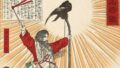
Tokugawa Ieyasu (The patient strategist) established a robust dual-control system to ensure his regime’s longevity after destroying the Toyotomi clan. He enforced strict financial burdens on Daimyo and alternated between tight and loose governance cycles over 260 years. However, severe fiscal deficits and the shocking arrival of Commodore Perry ultimately collapsed this isolated peace, forcing Japan to officially open its borders to the world.
Tokugawa Ieyasu aimed to build an absolute governing system. Therefore, he strategically relocated the potentially rebellious Tozama Daimyo to remote territories for strict surveillance.
Furthermore, he established the cold Ikasazu Korosazu principle to systematically strip their financial power.
Consequently, the third shogun institutionalized the Sankin Kotai system. This mandatory alternate attendance required lords to spend massive fortunes traveling to Edo.
Additionally, imposing Fushinyaku duties further drained their treasuries. Ultimately, these severe financial burdens successfully eradicated any capacity for armed rebellion.
🔍 Key Takeaways 🔍
Financial starvation prevents military uprisings. By imposing massive expenses through Sankin Kotai and Fushinyaku, Ieyasu systematically stripped the Tozama Daimyo of their wealth, securing a rock-solid foundation for 260 years of Tokugawa rule.

Initially, the Bakufu strictly enforced the Buke Shohatto under Budan Seiji. They ruthlessly confiscated domains for minor infractions like unauthorized castle repairs.
However, this extreme severity created masses of unemployed samurai, ultimately triggering the massive Keian Uprising in 1651.
Surprisingly, this violent backlash forced the fourth shogun to pivot towards Bunji Seiji. The government utilized Confucianism to instill values of absolute loyalty and hierarchical respect.
Consequently, samurai transformed from pure warriors into loyal administrators, stabilizing the regime through psychological conditioning rather than physical force.
🔍 Key Takeaways 🔍
Extreme oppression inevitably sparks violent backlash. The Bakufu wisely transitioned from the harsh Budan Seiji to the ideological control of Bunji Seiji, successfully securing long-term stability by programming absolute loyalty into the samurai mindset.

Despite transitioning to Bunji Seiji, the Bakufu failed to resolve its chronic financial deficits. During the Ogosho Jidai, the retired eleventh shogun, Tokugawa Ienari (The extravagant ruler), fatally damaged the national treasury with his luxurious lifestyle.
Consequently, this internal decay severely weakened the government’s authority.
Meanwhile, Japan maintained a strict Control Boeki system through Nagasaki. However, the sudden Perry Raiko in 1853 shattered this isolated peace.
The US fleet demanded supply ports for their whaling ships. Ultimately, facing absolute military superiority and domestic bankruptcy, the Bakufu surrendered to foreign pressure, marking the definitive end of the Edo period.
🔍 Key Takeaways 🔍
Internal financial ruin destroys the ability to resist external threats. The extravagant Ogosho Jidai fatally weakened the Bakufu, leaving it completely defenseless against the overwhelming military pressure of the Perry Raiko, forcing the end of Japanese isolation.

The Edo period operated on a dynamic cycle of tight and loose governance. Ieyasu’s initial martial strictness successfully neutralized warlords but required a transition to civilian rule to prevent internal revolt. Ultimately, however, unmanageable financial deficits and overwhelming foreign pressure collapsed the regime. The main points of this article are:
‣ Harsh martial rule eventually necessitates ideological control.
‣ Internal bankruptcy guarantees defeat against external pressure.
We hope these historical lessons offer valuable perspectives on how rigid systems must evolve, and how internal fiscal health dictates external resilience.
Q1. When did the Bakufu shift to Bunji Seiji?
Following the 1651 Keian Uprising during the fourth shogun’s reign. The government replaced strict military suppression with peaceful governance rooted in Confucian loyalty.
Q2. What was the true purpose of Sankin Kotai and Fushinyaku?
Both systems specifically aimed to drain the Daimyo’s financial resources. Forcing massive expenditures on travel and public works prevented them from funding rebellions.
Q3. How does understanding “governance cycles” help study the Edo period?
Viewing history through the lens of alternating “tight” and “loose” policies reveals that historical events are not isolated incidents, but predictable reactions to previous political extremes.